
The Fourth Amendment Does Not Ban Looking Around Even In Superior

Here’s what the federal complaint lays out.

Ian Cuypers made a wrong turn down a one-way street while delivering DoorDash.

That’s a traffic ticket.

According to the complaint, multiple officers arrived, drew firearms, and pointed them at him despite no basis to believe he was armed or dangerous.

He exited the vehicle.

He backed toward officers with his hands up.

He was confused. He was scared.

He was tased.

Later, he was charged with resisting or obstructing.

A jury acquitted him.

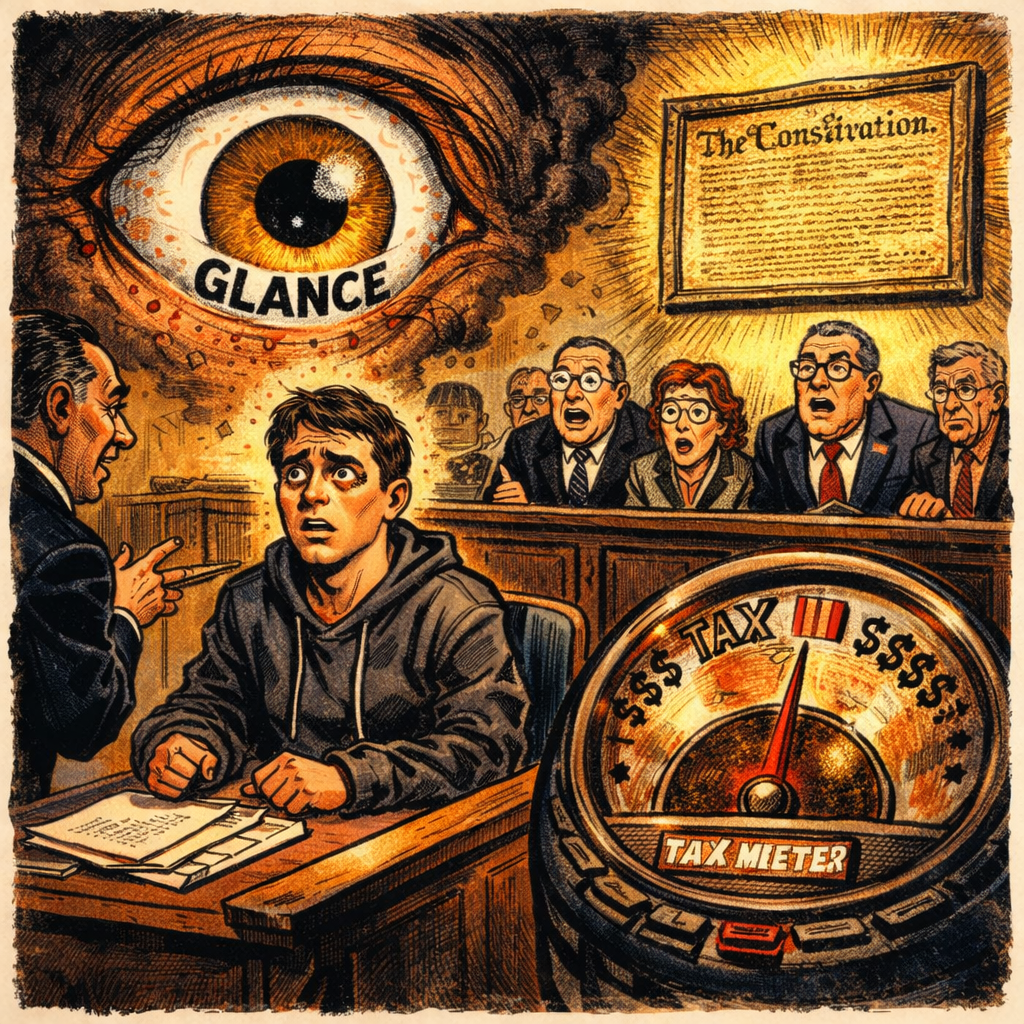
And somewhere in the narrative justification? Glances. Looking around. Confusion.

Let’s say this slowly:

The Constitution does not criminalize nervous eye movement.

If being confused while surrounded by officers pointing guns at you is suspicious, then we’ve redefined “reasonable.”


Guns Drawn Over a Wrong Turn

The complaint states officers drew their firearms during a stop for a minor traffic violation, without a basis to believe the driver was armed or posed a threat.

That escalation is the hinge point.

Because once you raise the temperature like that, every movement becomes “furtive.”

Every glance becomes “non-compliance.”

Every delay becomes “resisting.”

But here’s the kicker.

After all that, the jury said not guilty on resisting.

That’s not a technicality.

That’s twelve people saying the prosecution didn’t carry the load.


Wait—Why Did the City Prosecute This?

Now we hit the part nobody at City Hall wants to discuss.

Why did the city push this resisting charge all the way to trial?

Why wasn’t the District Attorney handling it?

Resisting or obstructing under Wisconsin law is typically prosecuted by the county DA’s office.

So why was this case pursued in a way that, according to the complaint, went “all the way to trial” despite lacking probable cause?

Who made the call to keep going?

Who reviewed the evidence?

Who signed off on taxpayer-funded courtroom time over a case built on “he looked around”?

Because once the resisting charge stuck around long enough to require a jury, the meter started running.

And the meter isn’t connected to City Hall’s personal Venmo.

It’s connected to you.


Indemnification: Translation — You Pay

The complaint explicitly includes a claim for indemnification under Wisconsin law requiring the City of Superior to pay tort judgments for employees acting within the scope of their employment.

That’s legalese for:

If this ends in damages, the city cuts the check.

Defense costs.

Attorney fees.

Compensatory damages.

Potential punitive exposure for individuals.

Add in the cost of the criminal trial that resulted in acquittal.

This isn’t abstract.

This is budget-impact real.


The Optics vs. The Constitution

Here’s the pattern taxpayers should notice.

Traffic stop.

Escalation.

Force used.

Resisting charge filed.

Resisting charge tried.

Resisting charge lost.

Federal lawsuit filed.

And no public explanation of why that prosecution was worth the risk.

If the case was strong, the jury would have said so.

If the case was weak, why was it pursued?

If the DA didn’t push it, than why did the City and Frog Prell ?

Those are grown-up questions.

They deserve grown-up answers.


Meanwhile, The People Who Don’t Get Indemnified

Teachers don’t get indemnified when they misjudge a situation.

City workers don’t get a public-funded legal shield if they overreact on the job.

They get consequences.

But when a prosecution built on shaky ground turns into a federal civil rights claim, leadership shrugs and calls it “part of the process.”

No.

It’s part of the budget.

And if insurers decide Superior is trending risky, premiums rise.

If premiums rise, services shrink.

And suddenly that “glance” costs more than a traffic ticket ever would have.


Final Crossing Signal

This isn’t about hating law enforcement.

It’s about hating unnecessary liability.

If confusion and glances during a gunpoint stop are enough to justify resisting charges, we’ve diluted probable cause into vibes.

And if City Hall pushed a weak case instead of letting it die quietly, taxpayers now deserve to know why.

Because when the jury says not guilty and the federal court says see you soon, someone should explain why we got here.  And whose being fired.

Instead, we get silence.

And silence is expensive.

Mic drop.

Sources :

Taylor Deposition

Federal Complaint


Disclaimer

This article is satirical commentary intended for public discussion and entertainment. It reflects opinion based on publicly filed federal court documents, not judicial findings of liability. Allegations referenced are drawn from the complaint in Cuypers v. Taylor et al. Teachers and regular city employees are recognized for their dedication and service to the community. Administrative leadership and elected officials, including the mayor, are public figures subject to scrutiny and debate regarding legal exposure, fiscal responsibility, and governance decisions.

Illustration depicting a courtroom scene with a young man, a tax meter, and an eye symbolizing scrutiny.

Why Superior’s Malicious Prosecution Could Cost Taxpayers Millions

The Fourth Amendment Does Not Ban Looking Around Even In Superior Here’s what the federal complaint lays out. Ian Cuypers made a wrong turn down a one-way street while delivering DoorDash. That’s a traffic ticket. According to the complaint, multiple officers arrived, drew firearms, and pointed them at him despite no basis to believe he was armed or dangerous. He exited the vehicle. He backed

Read More »
A student with a worried expression holding a notebook with 'HELP ME' written on it in a classroom setting.

Kid Still in the Superior School District? Blink Twice

The Kids Are Alright—They’re Just Not Here From 2018 to 2025, Superior Public Schools lost 722 students. That’s not a trickle—that’s a hemorrhage. We started at 4,622; now we’re sitting at 3,900, which is basically the school district equivalent of the Titanic playing musical chairs. And like any bad breakup, the school board says, “It’s not you, it’s demographic shifts, charter schools, and millennials who

Read More »
Illustration depicting the concept of qualified immunity with a judge and police officers in a courtroom setting.

“This Is Not a Close Case”: Superior Police Try to Hide Behind Qualified Immunity—Federal Judge Shreds It Like a Parking Ticket at a Frat Party

Qualified Immunity Gets the Electric Chair You ever see someone try to talk their way out of a mess they created, only for a judge to basically respond, “Oh, no”? That’s exactly what happened when three Superior, Wisconsin police officers—Taylor Gaard, Justin Taylor, and Matthew Brown—tried to pull the “we were just doing our jobs” defense after tasing an unarmed, non-threatening DoorDash driver for not

Read More »
Game show titled 'Who Wants to Replace a Councilman?' featuring contestants Natasha, Kate, and Garner.

Superior’s New Game Show: Who Wants to Replace a Councilman?

Three Ways to Lose One Seat Look alive, 3rd District! Incumbent Garner Moffat isn’t just defending his title this April — he’s duking it out with two fresh challengers, both of whom bring real‑world grit to the race. After scraping by in lower‑turnout races before, Moffat’s mandate might be about as sturdy as a paper canoe in a Nor’easter. The Incumbent: Moffat the … Mandate

Read More »
A young man in a red shirt is surrounded by police officers near a police car with flashing lights.

City Tells Public “All Good,” Emails Say “Oh Sh*t”

The Curious Case of Officer Justin Taylor, The Quitter Who Didn’t Really Quit Welcome to another episode of “Superior’s Most Questionable Hires,” featuring Officer Justin Taylor — the man, the myth, the liability… who walked out of one taxpayer-funded uniform only to walk right into another. Let’s break this down with all the blunt force of a baton to the public trust. Wait… He Quit, Right? Yep.

Read More »