
When local politicians run for reelection, they talk about roads, parks, and “working hard for the district.”
What they rarely talk about is the audit.
But the 2024 City of Superior financial audit reads like a financial X-ray of City Hall. And before voters return anyone to office, they should ask a simple question:
Did the council actually read it?
Because buried in the report are numbers that raise real questions about spending priorities, development strategy, and long-term liabilities.
And those decisions were approved by the very council members now asking voters for another term.
What the Audit Says
The city finished 2024 with about $155 million in total net position, meaning the city owns more assets than liabilities.
That number increased by $15.3 million during the year, suggesting the city’s financial position improved overall.
But the same report also shows several trends voters should understand.
Development Spending Is the Largest Budget Category
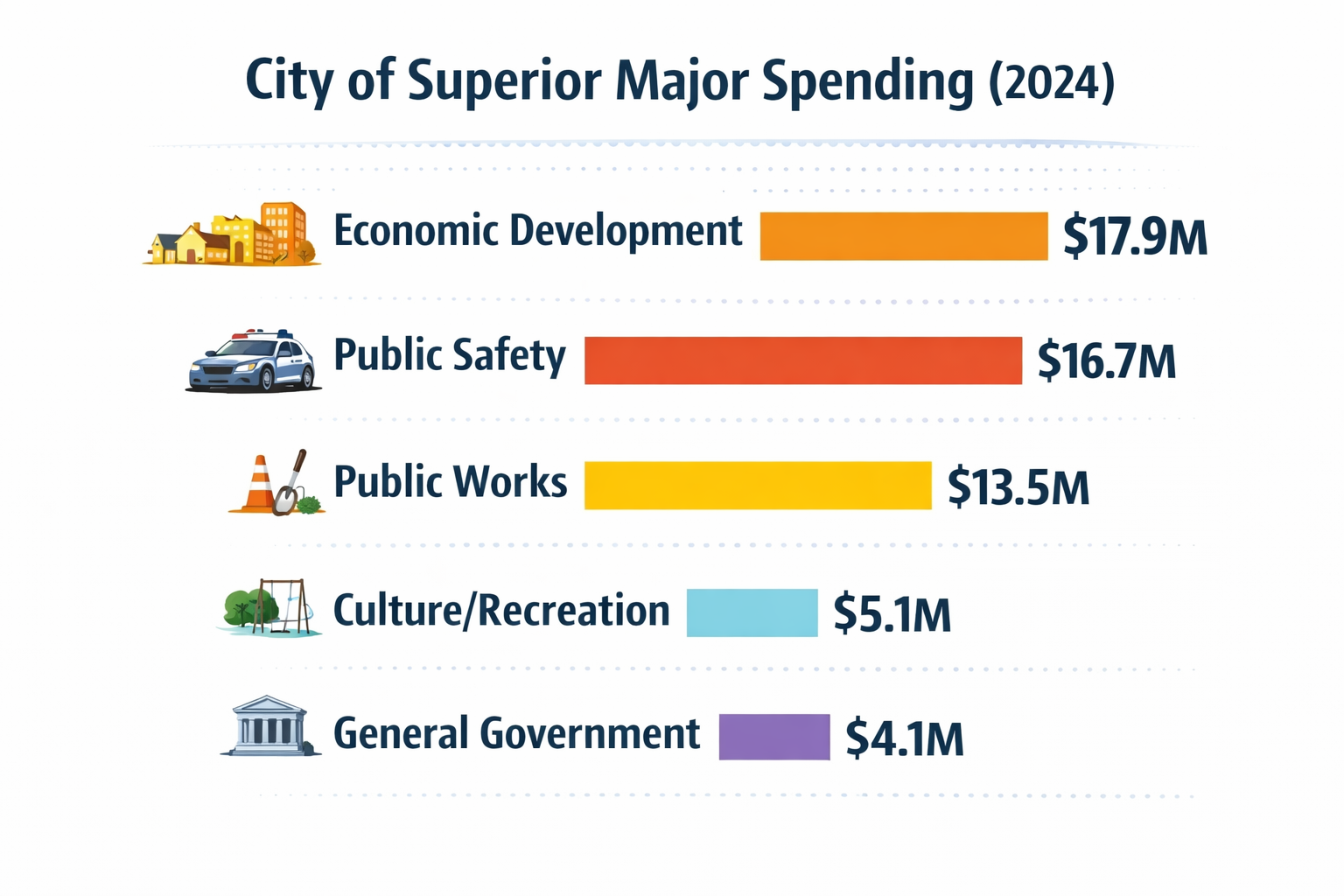
According to the audit, the city spent $17.9 million on conservation and development programs, making it the largest government spending category.
That’s more than:
Public safety ($16.7 million)
Public works ($13.5 million)
Question voters should ask:
Why is development spending larger than police and fire services?

Capital Spending Is Rising Fast
The audit shows construction in progress reached $14.5 million, almost double the previous year.
That includes spending on:
infrastructure
redevelopment projects
facilities and equipment
Large capital programs can improve a city—but they also create future maintenance costs and debt payments.
Question voters should ask:
How will the city pay to maintain these projects long term?
The City Depends on Outside Government Money
Another key number in the audit:
53.9% of the city’s governmental revenue comes from state and federal funding.
Property taxes account for only about 23.6%.
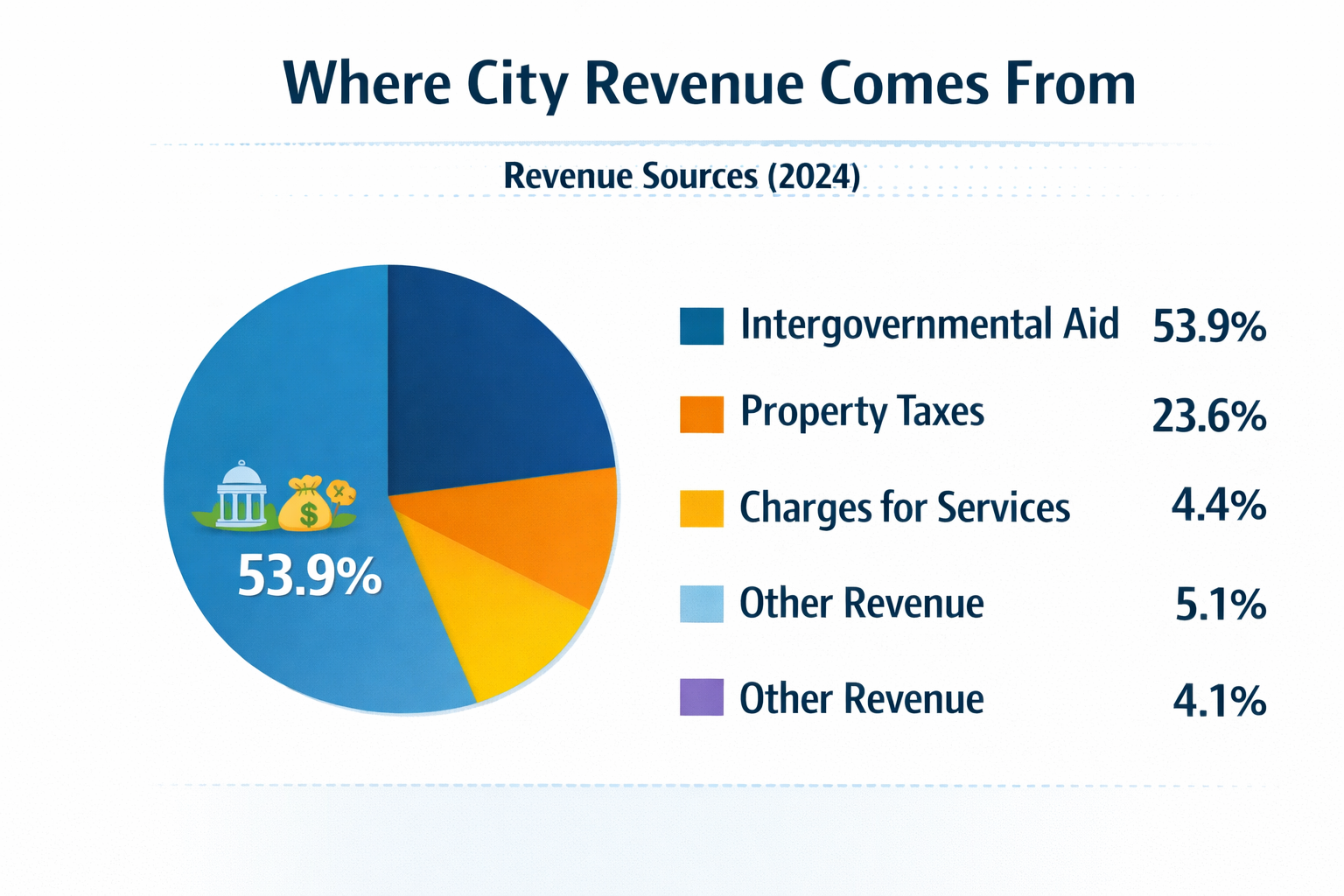
This means more than half the city’s revenue comes from someone elses taxes.
Those programs disappear.
Question voters should ask:
What happens to the city budget when federal funding ends?
The $12.8 Million Landfill Obligation
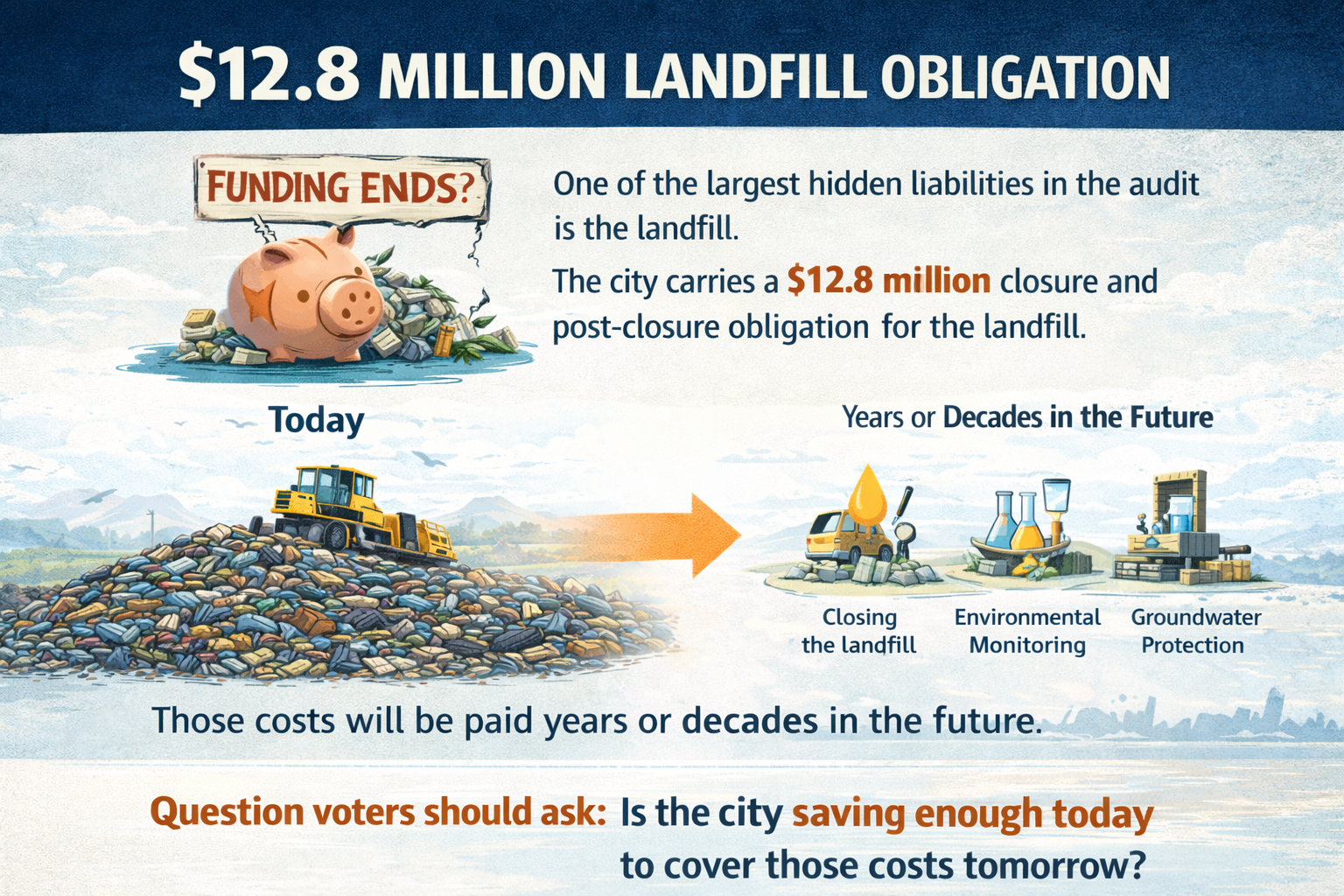
One of the largest hidden liabilities in the audit is the landfill.
The city carries a $12.8 million closure and post-closure obligation for the landfill.
That money will eventually be required for:
closing the landfill
environmental monitoring
groundwater protection
Those costs will be paid years or decades in the future.
Question voters should ask:
Is the city saving enough today to cover those costs tomorrow?
The Accounting Maze
The audit also shows the city operates 74 different governmental funds.
Each fund tracks a different program, grant, or initiative.
That includes:
development programs
capital projects
grant programs
special initiatives
While this system follows accounting rules, it also makes the budget extremely complex.
Question voters should ask:
Can the average taxpayer realistically track where the money goes?
Council Members Facing Voters
Several council members will be asking voters for another term soon.
Brent Fennesy – Challenged
Garner Moffat – Challenged
Nick Ledin – Challenged
Mark Johnson – Retiring
Ruth Ludwig – Retiring
Those candidates should expect questions about the financial decisions they approved.
Questions voters should ask at forums
Why is development spending the largest category in the budget?
How will the city replace federal funding when programs expire?
What safeguards exist for large capital spending projects?
Is the landfill closure liability fully funded?
How can residents better understand the 74-fund financial structure?
These are not partisan questions.
They are basic governance questions.
Final Crossing Signal
Superior’s audit does not show a city in financial trouble.
But it does show a city that is:
heavily invested in development spending with no tax development
dependent on outside funding city only funds 23% of it’s spending
managing complex finances across dozens of funds hard to follow
carrying long-term environmental liabilities in a city thats shrinking
None of those issues are emergencies.
But they are exactly the kinds of issues voters should understand before renewing anyone’s contract at the ballot box.
Because elections are supposed to be accountability.
And they’ve already announced tax hike for 2027.
We believe it’s a tax hike a year through 2039.
And accountability starts with asking the people in charge:
Did you read the audit?
Source : Superior TOC Title Page-1

THE GREAT SUPERIOR MONEY CIRCUS: 74 FUNDS, ONE GIANT TAXPAYER SHELL GAME!
🚨 SoupNutz Election Watch The Audit vs. The Ballot: What Superior Voters Should Ask Before Re-Electing City Council When local politicians run for reelection, they talk about roads, parks, and “working hard for the district.” What they rarely talk about is the audit. But the 2024 City of Superior financial audit reads like a financial X-ray of City Hall. And before voters return anyone to

Is Superior Safe for Drivers? Upcoming Bridge Detour Sparks Driver Safety Debate!
Bridge Out, Accountability Out: Welcome to the Superior Detour When the Blatnik Bridge detour starts funneling drivers through Superior, Wisconsin, thousands of people will experience the city the same way. Through a windshield. And lately that windshield view comes with a nagging question: “Who exactly is watching the watchers?” Because if you’ve been waiting for the mayor or city council to address the Ian Cuypers
Civil Rights Lawsuits in Superior Hit Record—Nick “LockStep” Ledin Up for Re-Election ‘Nothing to See Here’
SoupNutz Exclusive: When Quiet Sounds Like a Yes Some politicians shout. Some negotiate. And then there’s Nick “Lockstep” Ledin. For six years, Nicholas Ledin has held the District 1 seat. Six years of roll calls. Six years of budgets. Six years of votes that moved in rhythm with Jim Paine like they were rehearsing a municipal boy band reunion tour. You can call that teamwork.

COURT DOCS – Cuypers v. Taylor et al – Opinion and Order on Excessive Force (Feb. 9, 2026)
This Opinion and Order, entered on February 9, 2026, by Judge James D. Peterson in the United States District Court for the Western District of Wisconsin, addresses cross-motions for summary judgment in Ian Richard Cuypers v. Justin Taylor, Taylor Gaard, Matthew Brown, and City of Superior, Case No. 24-cv-743-jdp. The case arises from a February 28, 2024 traffic stop in Superior, Wisconsin, during which City
The Superior Police Department Federal Deposition That Reads Like a Plaintiff’s Closing Argument
In a federal court deposition, former Officer Taylor Gaard confirms that tasers shouldn’t be used on passively resisting suspects. Key policies highlighted.