The Transcript That Keeps Saying “Correct.”
If you ever wanted to hear the word “Correct” weaponized, buckle up.
On October 3, 2025, former Superior Police Officer Taylor Gaard gave sworn testimony in federal court in Ian Cuypers v. Superior Police Department Officer Justin Taylor .
And the deposition reads like a call-and-response church service for use-of-force policy.
Attorney: “Passive resistance is not actively resisting or higher; correct?”
Gaard: “Correct.”
Attorney: “So it was your understanding that it was not appropriate to use tasers on a passively resisting suspect?”
Gaard: “Correct.”
Somewhere, a civil litigator whispered, “Amen.”

The Taser Training Greatest Hits
Let’s go line by line, because the transcript sure does.
On What a Taser Can Do
Gaard acknowledged training materials stating tasers can cause:
“Death or serious injury.”
And when asked if that constitutes significant force?
Her answer:
“Correct.”
That’s not ambiguous. That’s not “it depends.” That’s a neon sign blinking: THIS IS SERIOUS.
On Passive Resistance
The department’s own definitions were reviewed under oath:
Passive resistance: “Non-threatening and non-compliant behavior.”
Active resistance: Behavior that physically counteracts control efforts and creates risk of bodily harm.
Then came the hammer:
Attorney:
“This policy does not authorize the use of a taser in response to passive resistance; correct?”
Gaard:
“Yes. That’s correct.”
That’s not a maybe. That’s not a footnote. That’s an admission.
On Verbal Defiance and Belligerence
From AXON training materials:
“Do not use for verbal defiance.”
“Do not use for belligerence.”
Under oath:
Attorney:
“It was your understanding that a taser should not be used in response to verbal defiance?”
Gaard:
“Correct.”
Attorney:
“And not for belligerence?”
Gaard:
“Yes.”
So not for mouthing off.
Not for attitude.
Not for sass.
This isn’t 1987 detention hall.
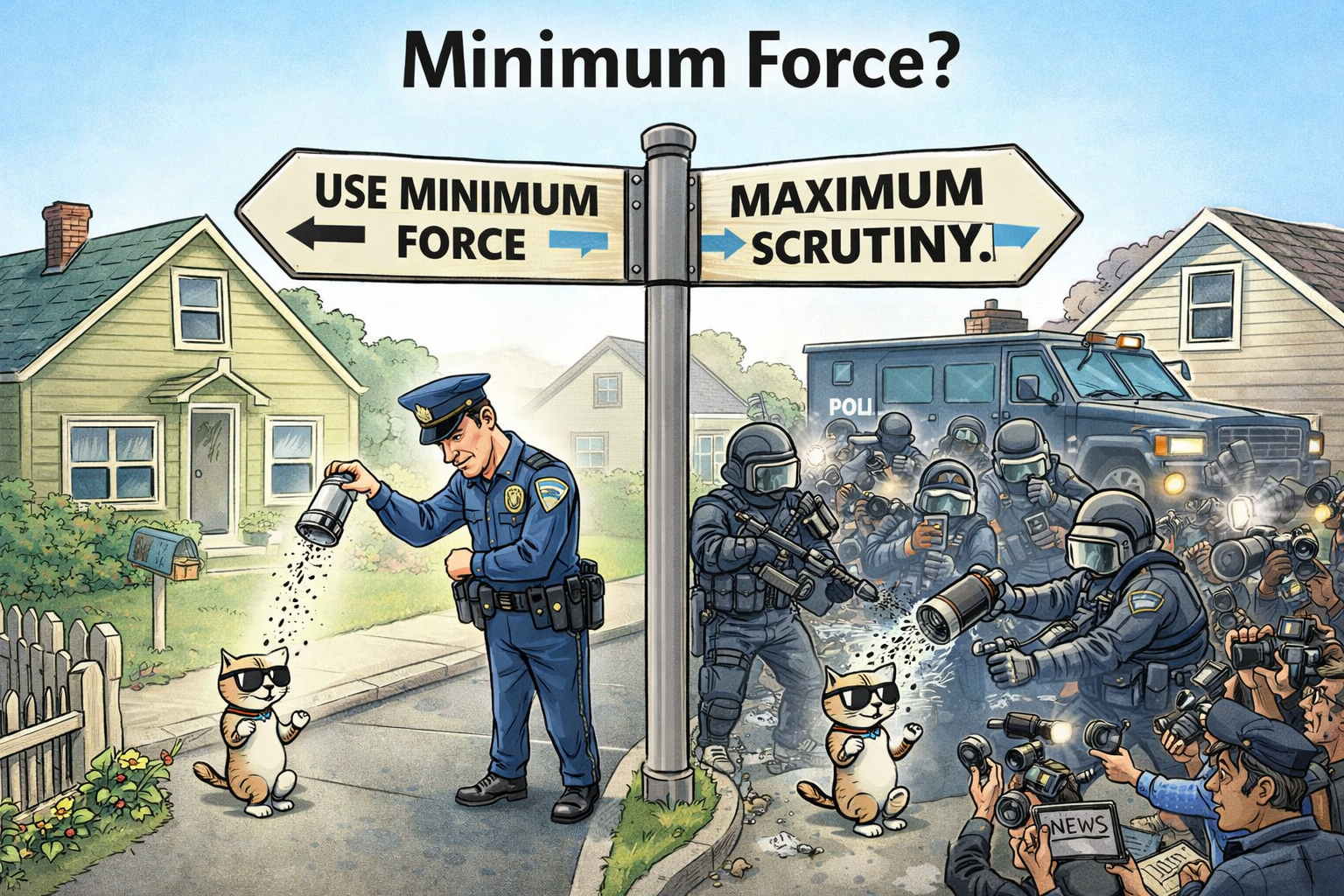
On Minimum Force
Training slide, Question 13:
“Use the minimum force necessary to accomplish lawful objectives.”
“Use force only on those actively resisting or higher.”
Under oath:
“It was your understanding that it was appropriate to use a taser only on those actively resisting or higher?”
Gaard:
“Correct.”
Then the follow-up:
“Passive resistance… is not actively resisting or higher; correct?”
Gaard:
“Correct.”
There it is again. Like a drumbeat.

The Traffic Stop That Wasn’t “Heat”
Let’s zoom out.
February 28, 2024.
Reason for stop? Likely driving the wrong way down a one-way street.
Attorney:
“Going the wrong way on a one-way… usually doesn’t end in arrest; correct?”
Gaard:
“Yes.”
Five officers responded.
Five uniforms. Five firearms. Multiple tasers.
Attorney:
“There were five bodies there in SPD uniforms; right?”
Gaard:
“Yes.”
And she drew her firearm before the driver exited the vehicle.
That’s not a parking ticket vibe. That’s a SWAT audition.
The Resume Meets Reality
Gaard testified she holds two bachelor’s degrees—criminology and psychology. She attended academy training. She was taser-certified through AXON.
No prior discipline. No suspensions.
This wasn’t ignorance. This wasn’t lack of training.
This was someone who acknowledged, repeatedly and clearly, what the policy said.
And juries don’t ignore repetition.
The Legal Tightrope
One exchange may end up living rent-free in closing arguments:
Attorney:
“In February of 2024, it was your understanding that the use of a taser was not appropriate in response to passive resistance; correct?”
Gaard:
“That’s correct.”
The courtroom version of Chekhov’s gun.
You introduce that line early?
It’s firing in trial.

Final Crossing Signal
Depositions don’t yell.
They don’t posture.
They just stack admissions like VHS tapes in a Blockbuster clearance bin.
And when a transcript echoes “Correct” over and over on key policy limits, the real question isn’t what training said.
It’s whether training meant anything when it counted.
Federal court will decide.
Stay tuned.
Sources :
Disclaimer
This article is commentary based on publicly filed deposition testimony in federal court . Allegations remain subject to judicial determination. All parties are presumed innocent unless and until proven otherwise. This piece reflects opinion and analysis for public discussion.

COURT DOCS – Cuypers v. Taylor et al – Opinion and Order on Excessive Force (Feb. 9, 2026)
This Opinion and Order, entered on February 9, 2026, by Judge James D. Peterson in the United States District Court for the Western District of Wisconsin, addresses cross-motions for summary judgment in Ian Richard Cuypers v. Justin Taylor, Taylor Gaard, Matthew Brown, and City of Superior, Case No. 24-cv-743-jdp. The case arises from a February 28, 2024 traffic stop in Superior, Wisconsin, during which City

The Superior Police Department Federal Deposition That Reads Like a Plaintiff’s Closing Argument
In a federal court deposition, former Officer Taylor Gaard confirms that tasers shouldn’t be used on passively resisting suspects. Key policies highlighted.

COURT DOCS – Use of Force Expert Witness Coordination – Superior and Eau Claire Police (May–June 2024)
This document consists of a series of email communications dated between May 15, 2024, and June 18, 2024, involving senior law enforcement officials in Wisconsin regarding a request for an external review of a police use-of-force incident. The correspondence originates from Paul Winterscheidt, Chief of Police for the Superior Police Department, as part of preparation for a municipal ordinance trial scheduled for July 2024. The

Sheriff Matthew Izzard & Chairman Mark Liebart: Is Accountability on Backorder in Douglas County?
Money Flows Like Lake Superior… Just Not Toward Accountability Douglas County has discovered a magical power. They can find money. Money for studies.Money for facilities.Money for upgrades.Money for “strategic initiatives.” But somehow — when the topic turns to dash cams and body cams for the Sheriff’s Department — the vault slams shut like Fort Knox on a diet. And here’s the question voters are starting to whisper
COURT DOCS – Ian Cuypers v. Superior Police Department Officers and City of Superior – Federal Civil Rights Complaint (October 24, 2024)
This federal civil rights complaint was filed on October 24, 2024, in the United States District Court for the Western District of Wisconsin by Plaintiff Ian Cuypers against officers of the Superior Police Department and the City of Superior. The lawsuit arises from a February 24, 2024 traffic stop in Superior, Wisconsin, during which Cuypers alleges officers used excessive force against him. According to the
