On April 7, 2026, Superior Police Officer Ibrahim Carson was reportedly looking for a different wanted person outside the Northern Aire Apartments on Oakes Avenue. David Donald Ducado Menton, 42, was there. He was not the target of that warrant. Then Menton moved toward the building, Carson chased him, a struggle followed, Carson fired, and Menton died.
That is not some side detail hiding in the couch cushions.
Police were there for someone else.
Menton still dead.
The Chase Is Still the Story
Chief Paul Winterscheidt called Menton a “violent, armed individual.”
Fine. Put that in the official column.
But Menton was running away.
Not charging SPD Rookie Officer Carson. Not advancing. Not coming at him like some bargain-bin action villain from a Reagan-era cop movie. Running the other direction.
That does not make Menton innocent. It does not erase a warrant. It does not turn a recovered gun into a paperweight.
But it does challenge the lazy idea that “dangerous” automatically means “immediate deadly threat” in that moment.
Dangerous is not a timeline, nor is it a death warrant in Wisconsin.
What did SPD Rookie Officer Carson know before the chase? Did he know about the warrant? Did he see a gun before contact? Did Menton display it, point it, or reach for it? Or did the danger become clear only after the chase turned physical?
Those questions matter.
Because “he was armed” after the fact does not automatically justify every decision before the fact.
“He ran” is not magic cop dust sprinkled over a fatal encounter after the body is cold.
Just like “resisting arrest” in the Cuypers case, these phrases become government comfort food: warm, bland, and designed to stop the public from chewing.
The Fourth Amendment Problem Wearing Steel-Toe Boots
The Fourth Amendment is not decorative trim on the Constitution. It protects people from unreasonable searches and seizures. That includes police stops, arrests, takedowns, and force.
In Brown v. Texas, the Supreme Court said police need objective, articulable suspicion before detaining someone. Translation: “Because I felt like it” is not probable cause with a haircut.
In Illinois v. Wardlow, the Court said unprovoked flight in a high-crime area can help create reasonable suspicion. But it did not say every person who walks away from police becomes a piñata full of constitutional exceptions.
That matters in Menton’s case.
What did SPD Rookie Officer Carson know before the chase? Did he know Menton had a warrant? Did he suspect Menton of a crime before Menton moved away? Did he see a weapon before grabbing him? Was there reasonable suspicion before the seizure, or did his chase create the crisis used to justify everything after?
“Those are not hippie questions. Those are Fourth Amendment questions.”
The Bodycam Did Not Save Their Narrative
Superior police released bodycam footage on May 12. Reporters said it showed Rookie SPD Officer Carson chasing Menton, grabbing him near the apartment entrance, taking him down, and yelling “stop resisting.” Menton can reportedly be heard saying, “I’m not resisting.” The critical moment of the shooting was described as obscured or blurred.
Beautiful.
The city finally gives the public video, and the most important part arrives in full Blair Witch Project mode.
That does not prove Rookie SPD Officer Carson committed a crime. It also does not prove the shooting was justified. It proves the video does not answer the question everyone is asking:
Why does this keep happening?
Remember Ian Cuypers? Superior Better. Taxpayers Will Be Writing Him a Check.
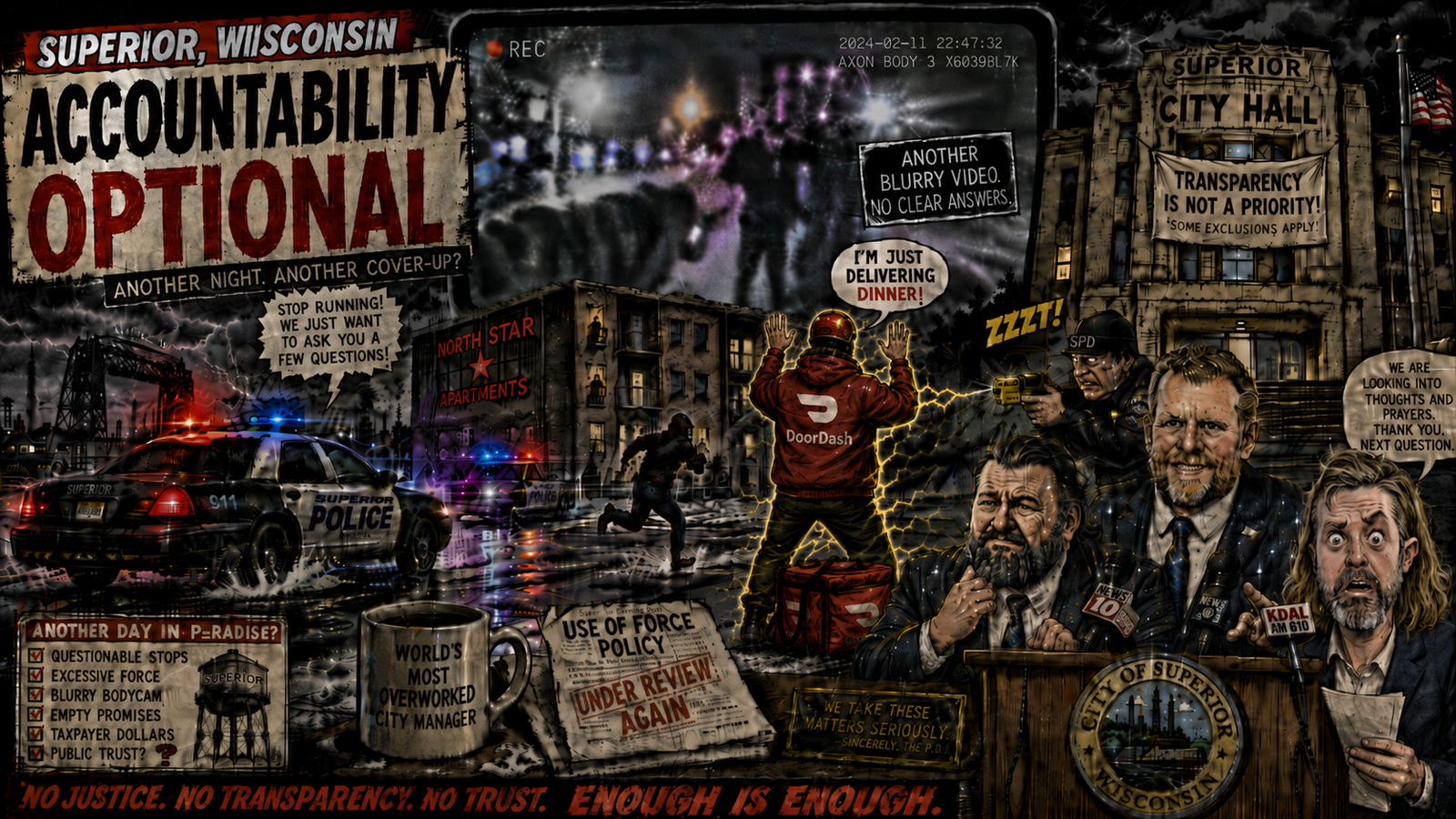
This is the same city where Ian Cuypers, a DoorDash driver, made a wrong turn down a one-way street and ended up staring at guns before Rookie SPD Officer Taylor Gaard tased him in the back and legs. U.S. District Judge James Peterson ruled that Rookie SPD Officers Gaard’s taser use was excessive force, “objectively unreasonable,” and violated clearly established law because Cuypers was not actively resisting and did not pose a threat.
Translation: A federal judge looked at Superior’s “public safety soufflé” and said, “This thing collapsed before it left the oven.”
The court described officers treating a simple traffic stop like a high-risk event, escalating it into a volatile encounter. Cuypers had pulled over, exited when ordered, kept his hands above his head, and substantially complied. Then he got tased in the back.
That is not community policing. That is COPS directed by panic and edited by liability attorneys.
About That Malicious Prosecution Part
Let’s be precise, because facts matter and defamation lawyers need hobbies.
The federal judge did not issue a final trial verdict saying Superior committed malicious prosecution. But the court allowed Cuypers’ malicious prosecution claim to proceed. WPR reported that the court agreed there was no probable cause to cite Cuypers and that a reasonable jury could infer officers wanted to prosecute him (City Attorneys Office Brought the Case) “to justify their use of force.”
So no, the malicious prosecution claim is not over.
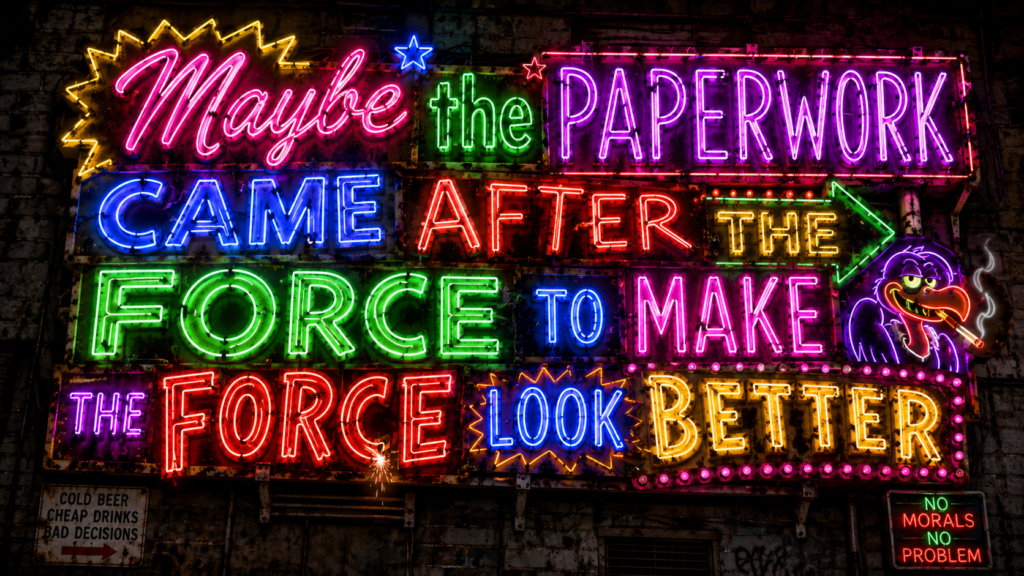
But yes, the judge allowed the claim to survive, and that is a big, ugly neon sign over City Hall reading:
Maybe the paperwork came after the force to make the force look better
And if that sounds familiar, congratulations. You have located Superior’s pattern.
Pattern Recognition Is Not Conspiracy
Superior has now had the Cuypers case, where a federal judge found unconstitutional taser use during a traffic stop.
Then comes the Menton shooting, where police reportedly chased a man they were not originally there to arrest, and he ended up dead.
Add in the fact that Superior has had three officer-involved shootings in six months, after reportedly having only two in the prior 21 years of Chief Winterscheidt’s career (and one of those involved shooting someone they claimed aimed a crescent wrench), and suddenly “isolated incident” starts looking like a clown car with Superior Rookie SPD plates.
One case may be an incident.
Two cases may be a warning.
Three shootings in six months, plus a federal excessive-force ruling?
That is not isolated. This is a pattern, an M.O.
Escalation Keeps Entering the Chat
The Cuypers case began with a wrong turn.
The Menton case began with police looking for someone else.
“In both, the core question is not whether police had any authority to act. The question is whether they escalated the situation beyond what the facts required.”
That is the part officials hate talking about.
Because escalation lives in the gray area between “legal authority” and “good judgment.” And judging by recent events, Superior’s gray area has more potholes than Tower Avenue after freeze-thaw season.
Mayor Jim Cannot Platitude His Way Out of This
Regular city workers are not the problem. Teachers are not the problem. Frontline employees are not the problem. Most working people are just trying to survive another shift while administrators and politicians discover new ways to reward themselves for “leadership,” which apparently means standing near microphones talking about water rates the day after what’s been described as an execution.
Mayor Jim Paine and city leadership have decided to ignore the civil rights issues in Superior, and the taxpayers will pay the bills for it.
This needs documents.
This needs timelines.
This needs the full DCI report.
“This needs answers about pursuit policy, backup, supervision, less-lethal options, training.
And whether the Superior police “tyrant” culture has started treating confusion, fear, and movement as threats to be crushed first and explained away later.”
The Questions Superior Still Owes
Why did Rookie SPD Officer Carson chase Menton if Menton was not the original target?
What did Rookie SPD Officer Carson know about Menton before the pursuit?
Did Rookie SPD Officer Carson see a weapon before physical contact?
What does the autopsy show?
What does firearm forensic testing show?
Why was backup not awaited?
What policies govern chasing someone who is not the suspect officers came to arrest?
After Cuypers, what training changed?
After the judge’s excessive-force ruling, what did Superior fix?
Or did everyone just file it under “oopsie lawsuit” and move on?
Final Crossing Signal
David Menton was not the person police reportedly came to arrest. He was chased anyway.
Now he’s dead.
Ian Cuypers made a wrong turn. He was tased in the back anyways. A federal judge said it was unconstitutional.
Superior keeps telling residents to treat these as isolated events.
But at some point, the dots stop being dots and start becoming the map to Superior.
And this map points straight to escalation, feckless accountability, and a city leadership structure that seems shocked every time the public notices the smoke pouring out of city hall.
Mic drop.
“Release the records. Explain the chase. Stop calling patterns isolated when a city this small has 4 Civil Rights Lawsuits in 3 years, and more on the way.”

Superior’s Civil Rights Storm Clouds Are Gathering
Examining patterns in police actions reveals a troubling trend in accountability and transparency that demands urgent attention.

Soupnutz Add-On: The Weird Stuff In Mayor Jim’s Office Budget
Superior’s mayor’s office budget is costly, featuring unique line items like overtime and a Chief of Staff, raising questions about taxpayer value.

Pick The Bumper Sticker That Hurts City Hall’s Feelings
We’re putting the bumper stickers to a vote, because democracy should occasionally do something useful between potholes and press releases. Pick the one you’d actually slap on your car, truck, laptop, beer fridge, or emotionally damaged snowblower. The winner gets printed, and yes, City Hall can have one too — assuming they can find room between the excuses, title plaques, and the taxpayer-funded jazz hands.

Superior’s Paine Premium Strikes Again
Superior’s mayor’s office budget outpaces peers, costing residents more for less. Explore the spending disparity and its implications.

Mayor Jim Paines Re-Election Platform Is Direct Deposit
Local politics morph into a lifestyle as teachers and city workers keep communities running while politicians evade regular life.