
The Landfill Closure Wasn’t a Surprise Party
Back in 2019, a city-commissioned organizational study flat-out warned the landfill was headed for a closing.
It said:
“The City’s landfill is projected to close in 2025.”
And it didn’t stop there. It basically screamed: start planning now—contracts, staffing, and the entire post-landfill reality.
“The City should begin the planning process for the closing of the landfill, the contract negotiations and the elimination of the positions currently working at the landfill.”
That’s 2019. That’s not ancient history. That’s “Stranger Things Season 3 was new” history.

Fast Forward: Leaders Are Touring the Dump Like It’s Disney World
Now we’ve got current headlines about Superior officials starting discussions and fact-finding like they just discovered garbage exists.
Meanwhile, the landfill clock is still ticking. And every day you stall is another day the future gets more expensive.
Why “We’ll Deal With It Later” Always Bills You Twice
The newest reporting lays out the ugly math:
A city-owned transfer station is estimated at $117–$120 per ton.
Using WLSSD’s transfer station is estimated at $88–$92 per ton.
So delaying decisions doesn’t keep costs down. It keeps you stuck paying whatever the market feels like charging that week—like Ticketmaster, but for trash.
And because Superior’s collection fee is designed to cover collection and disposal costs, when disposal costs jump, the fee pressure jumps too.
 The 2019 Report Basically Predicted This Mess
That 2019 study didn’t just mention closure. It warned closure requires “significant pre-planning”—including lining up the transfer contract and managing the staffing fallout.
It even flagged the risk of employees bailing once they know their jobs are going away:
Employees may leave “prior to the close.”
Translation: if you wait too long, you don’t just lose time—you lose people, leverage, and continuity. Then you pay consultants and overtime to patch the hole. Classic government two-step.
So Why Didn’t Superior Citizens Get More Years Out of The Dump?
Superior’s landfill capacity is like a pizza. If you invite the whole region to dinner, don’t act shocked when there’s wners who bought the damn pizza.
For years, regional arrangements sent waste through Superior—because it was convenient and because deals get made. The landfill agreement discussions and extensions show how regional waste flows and contracts shape Superior’s timeline.
Inference (but a very reasonable one): letting outside tonnage use Superior’s landfill can bring revenue or regional cooperation benefits, but it also burns through local capacity faster—meaning residents lose years they could’ve had if access stayed tighter.
If the city chose revenue/relationships over preserving lifespan, that’s not “planning.” That’s selling tomorrow to cover today.
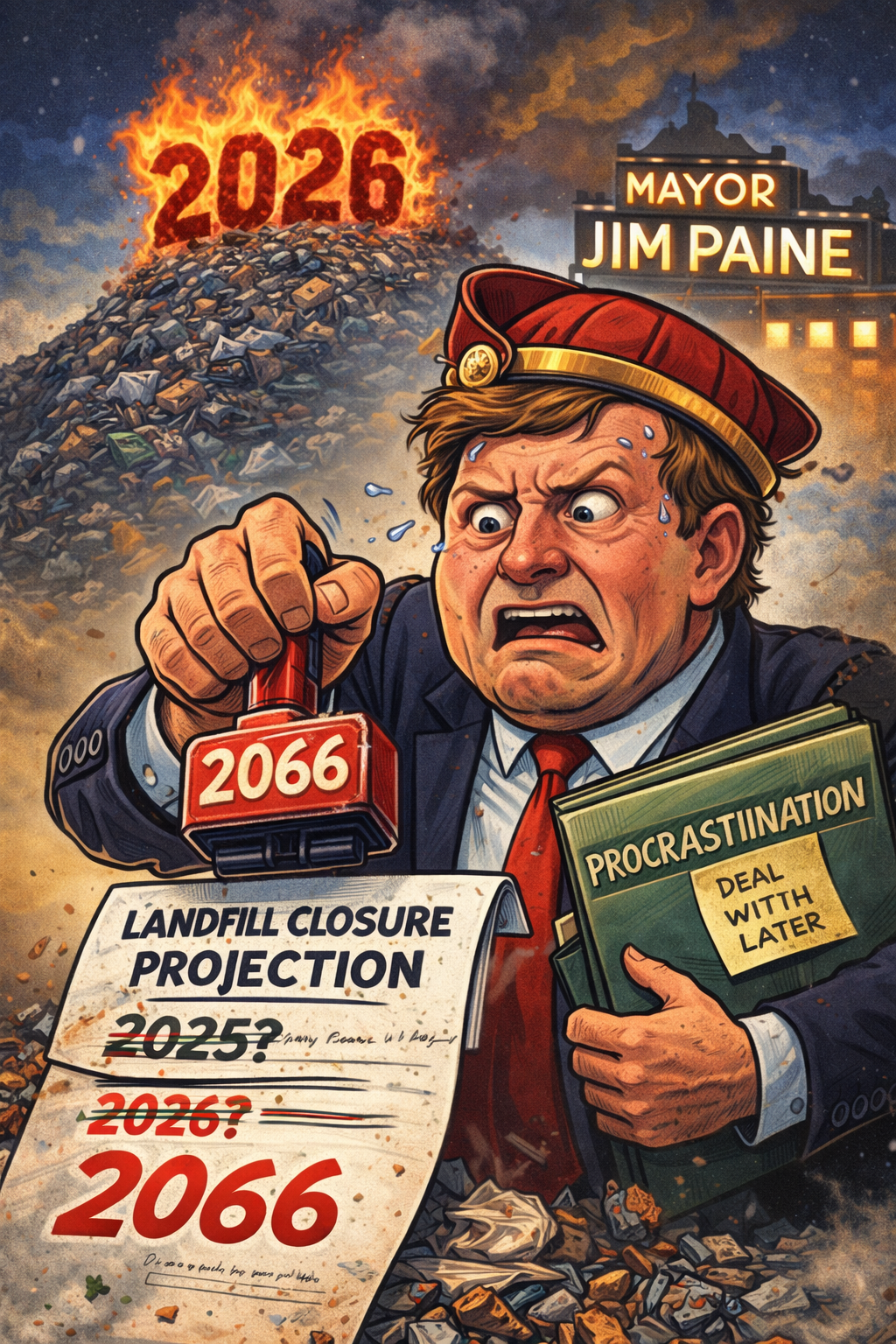 Where Mayor Jim Paine and the Council Come In
Mayor Jim Paine and the council don’t get to play innocent bystanders when the 2019 report literally told the city to start planning the closure and contracts years in advance.
Taxpayers should be asking, loudly:
Why did we get “projected to close” in 2019… and “just starting discussions” now?
Why are we still weighing options when per-ton costs are already staring us in the face?
Why did residents not get a clear, transparent “lifespan vs. access” tradeoff debate before capacity got chewed up?
Because once the landfill hits capacity, the city doesn’t negotiate from strength. It negotiates from panic.
And panic is always billed.
Delaying the landfill decision is like refusing to fix your brakes because the car still stops “most of the time.”
Sure—until it doesn’t.
Then you don’t just pay for brakes. You pay for the fence, the lawsuit, and the apology tour.
Mic drop.
Source :

Monday’s Meme-“Weeds Win 6-4 Council Vote on East 5th Street”
A street job became a bureaucratic soap opera: delays, due diligence, and weeds where finished work should be.

FOIA Friday: “Mayor Jim’s Tax-Payer Funded Campaign Aide ?—Plus an HR Hook-Up for Cousin Eddie”
City Hall’s HR rewrite sparks nepotism fears, election-year questions, and taxpayer outrage over a campaign-style aide.

Monday Meme Drops: Lock the Clock, Save Bucks!
Superior PD’s punch-clock scandal exposed: 1,180 retro-edits, ghost shifts, and a possible $41K hit to taxpayers.

FOIA Friday: 1,180 “Retro-Punches” — Superior’s Time-Card Circus!
PowerTime retro-punches may be skewing hours, hiding overtime, and burning taxpayer dollars.

SPD Decoder Ring: Leadership Swaps That Lawyers Love
Federal court meets SPD turnover: a timeline decoder for promotions, retirements, and who was in charge when it happened.