Let’s bring back that late-night charity voice:
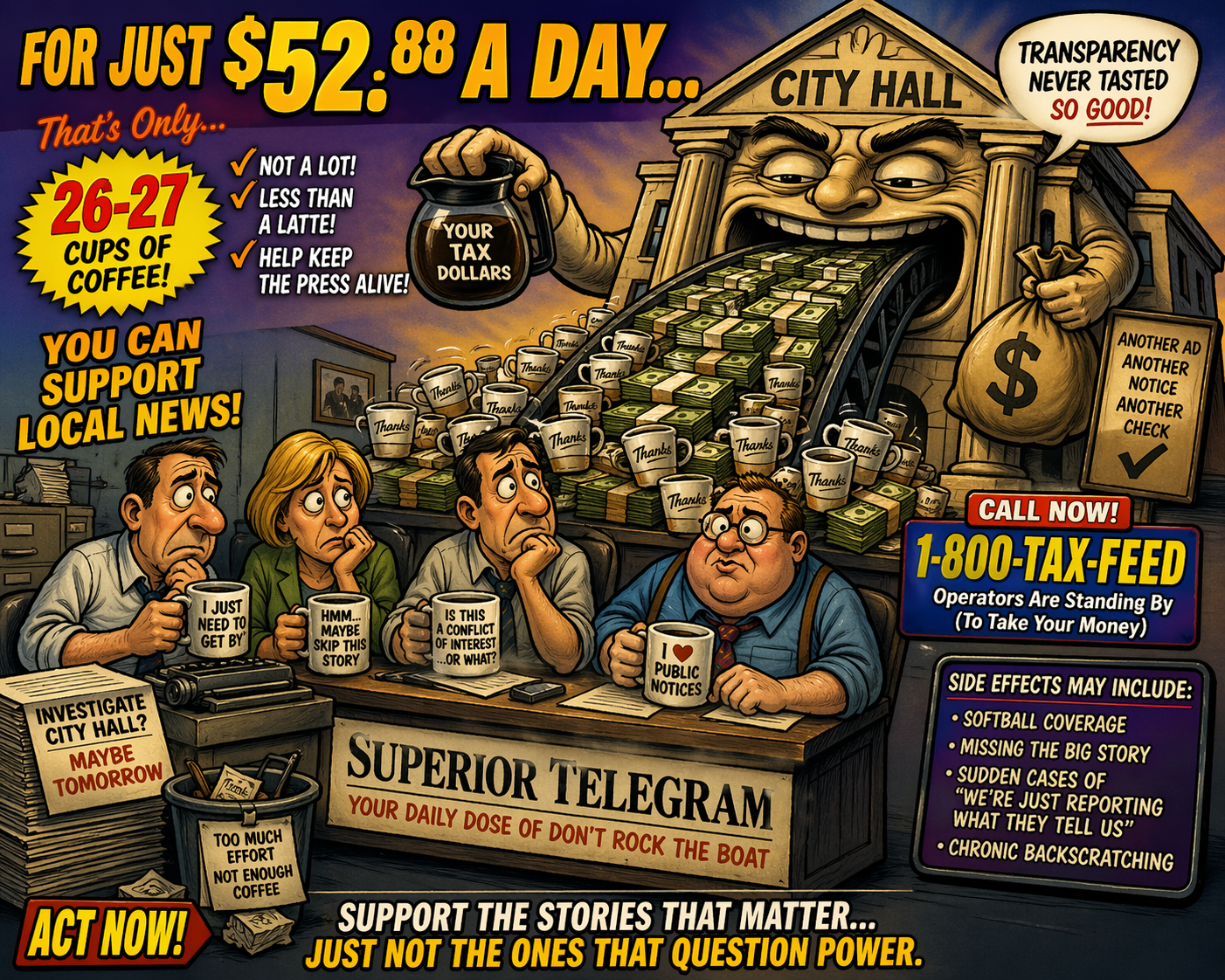
“For just $52.88 a day… you too can support a local newspaper…”Only this time, it’s not voluntary. It’s baked into the budget like stale cafeteria pizza. Because Superior taxpayers dropped $19,300.50 in 2025 on newspaper spending —about $52.88 a day. Or in coffee terms:
-
- 26 Kwik Trip Coffees daily
-
- Enough caffeine to keep a newsroom buzzing… or at least solvent
And suddenly… things start making a little more sense.
The Daily Grind Comes With Strings Attached
Think about it. If someone bought you a twenty six coffees every single day, no questions asked…
You probably wouldn’t:
If someone bought you a twenty six coffees every single day, no questions asked…
You probably wouldn’t:
-
- Roast them publicly
-
- Dig too deep into their problems
-
- Or start flipping rocks in their backyard
Now apply that logic to a newspaper getting steady taxpayer-funded ad revenue.
Investigative Journalism… Brought to You by the People Being Investigated?
Here’s where it gets awkward.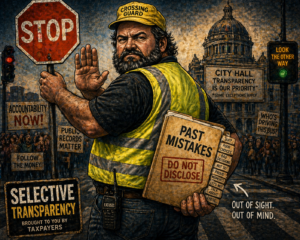 The same entity:
-
- Spending $52.88 a day
-
- Buying ads, notices, and space
-
- Making decisions
-
- Running the show
Well… it’s supposed to hold them accountable.That’s like asking your landlord to write an exposé about themselves while you’re paying their mortgage.
“We Ensure Transparency” (Translation: Please Don’t Look Too Hard)
Mayor Jim Paine and the council don’t need to say a word. The system says it for them. Official line: “This is required for public transparency.”Real-world effect: A steady stream of revenue flowing from City Hall to the paper.Nobody’s saying there’s a backroom deal.
But you don’t need a conspiracy when you’ve got comfortable dependence.
Weekly, Monthly… Loyalty Program?
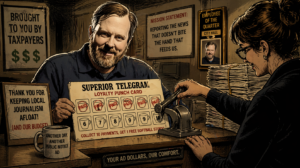 Let’s recap the “subscription”:
-
- $52.88/day → 26+ coffees
-
- $371.16/week → caffeine-fueled silence
-
- $1,603.38/month → a pretty loyal customer
“Buy 300 notices, get one softball article free.”
Meanwhile, Reality Check
Teachers? Still underpaid. Still showing up. Still doing the work. City workers? Grinding daily, no headlines required.But the system?It keeps pouring taxpayer money into a pipeline that looks less like journalism and more like mutual comfort. And somehow, the people at the top still find ways to keep their own cups full.
The Unspoken Rule: Don’t Rock the Revenue Boat
No one prints this part. No one says it out loud. But it hangs in the air like burnt coffee:Not zero. Not nothing.When you’re being funded by the subjects… how hard do you really push?
But maybe not too hard either.
Final Crossing Signal: Follow the Money, Find the Mute Button
 This isn’t about accusing anyone of anything shady.
It’s simpler—and somehow worse.
It’s about a system where:
This isn’t about accusing anyone of anything shady.
It’s simpler—and somehow worse.
It’s about a system where:
-
- Taxpayers fund the paper
-
- The paper covers the city
-
- And everyone just kind of… coexists
Because when City Hall is spending $52.88 a day for the press…
You don’t need to say “go easy on us.”
“The receipts already did.”
Mic drop.#DontBiteTheHand #52ADay #WatchdogOrLapdog