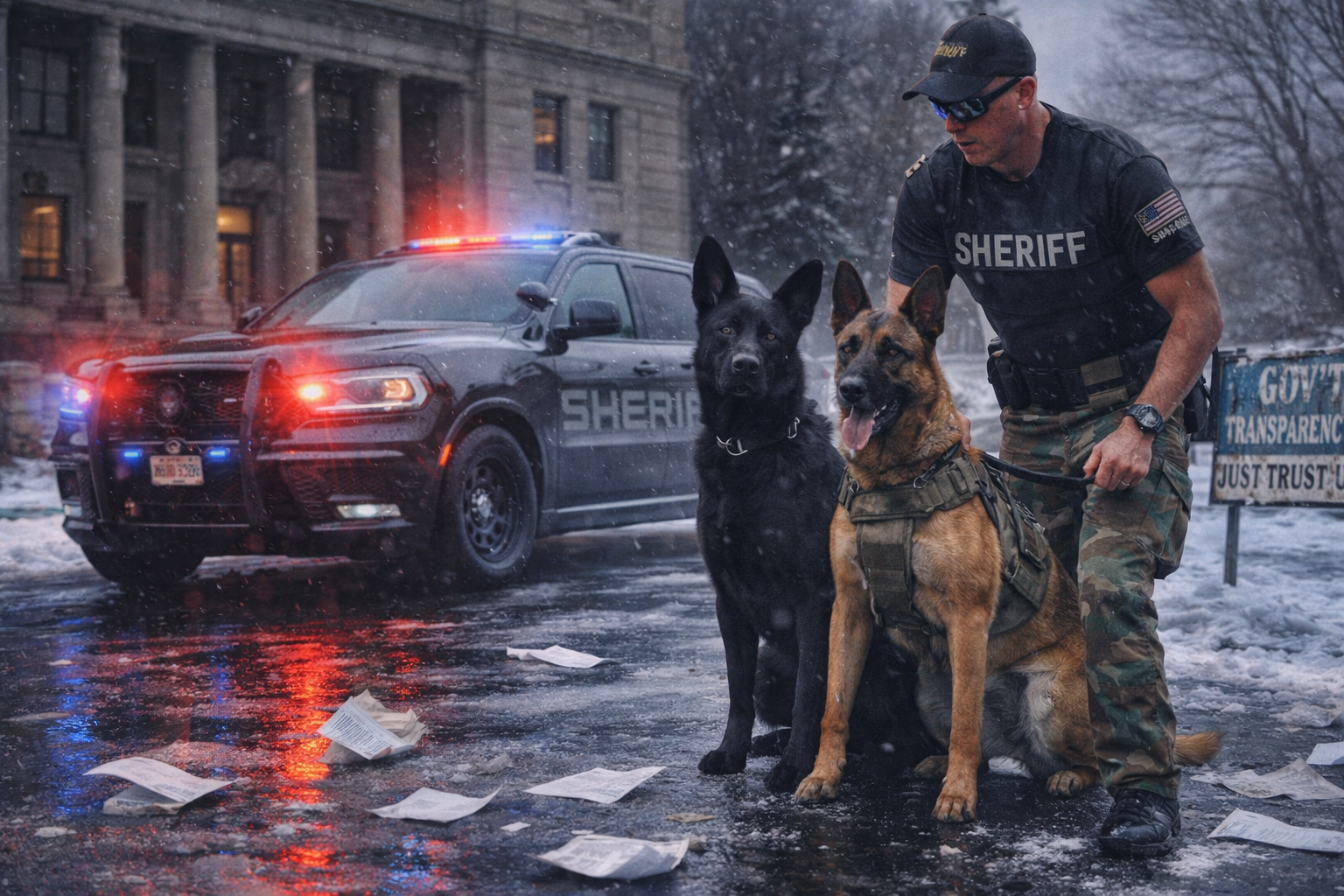
The Bite Doesn’t Need Reporting, and the Deputy Didn’t Need a Camera
Douglas County pulled off a little government magic trick.
For regular people, a dog bite triggers reporting rules. For a law-enforcement dog, not so much. County ordinance says the owner of a dog used by a law enforcement agency is exempt from the normal reporting requirement when someone is bitten while the dog is performing proper law enforcement functions, as long as rabies shots are current. The same ordinance also exempts that police dog from the usual quarantine requirement under those conditions. That’s not a ban on recording bites. It’s arguably weirder: the rules carve police dogs out of the ordinary bite-reporting and quarantine process.
Now add the punchline. The Douglas County Sheriff’s Office only recently put a body-worn camera policy into effect on March 12, 2026. So for a long stretch, the county had a written carveout for police dog bites while the sheriff’s office still lacked a modern body-camera policy. That’s not transparency. That’s a choose-your-own-adventure for official narratives.
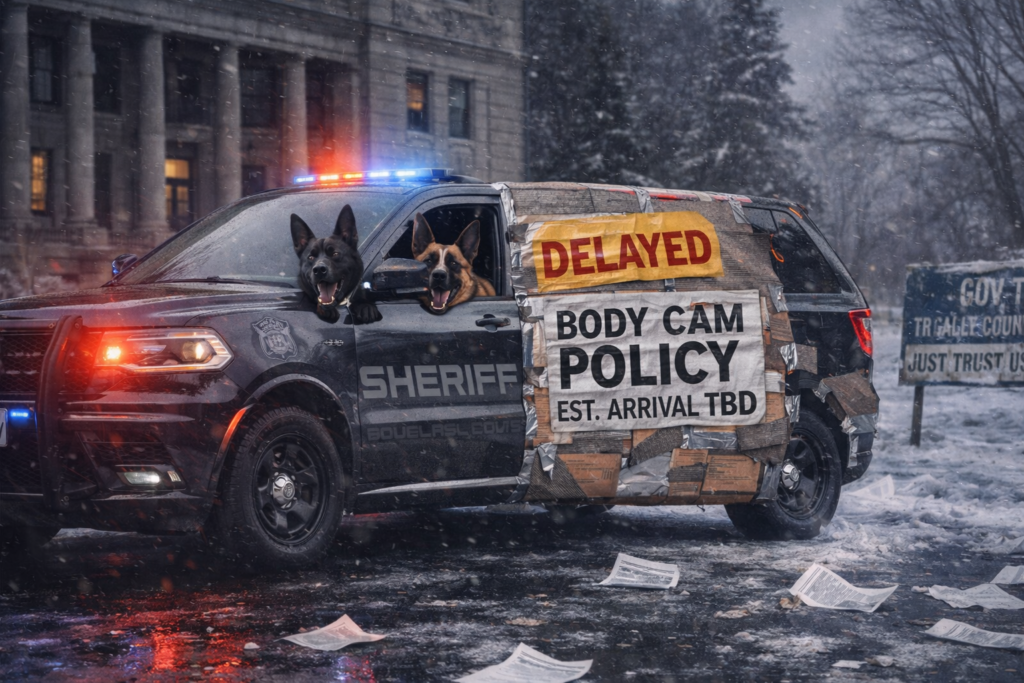
The Dogs Were Ready for High-Risk Work. The Cameras Took the Scenic Route.
The sheriff’s own K-9 page says the unit uses dogs for “high-risk situations” including building searches, tracking suspects, evidence location, search and rescue, and drug interdiction. It also says the dogs are trained to protect handlers and “hold a violent or dangerous person and prevent their escape.” In other words: this is exactly the kind of work where clear video matters, because memory gets creative when adrenaline shows up.
And what kind of dogs are they using? Public materials show at least one familiar police-dog heavyweight in the mix: German Shepherds, alongside the usual patrol-dog image machine the department loves to showcase. Big working dogs. Bite-trained dogs. Dogs deployed in force-heavy situations. Again, not a problem by itself. The problem is the accountability gap surrounding them.
Because when government says, “Trust us, the dog was doing proper law enforcement functions,” the obvious follow-up is: great, where’s the video?
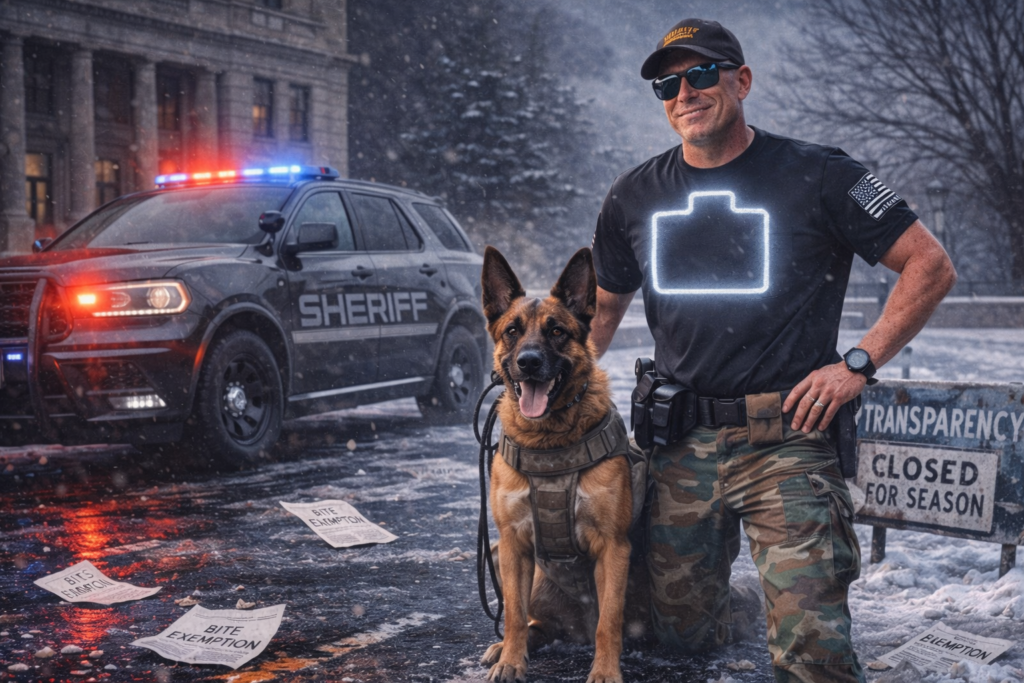
The Irony Here Could Pull a Hamstring
This is the deliciously bleak part.
Douglas County had rules saying police dog bites didn’t have to follow the same ordinary reporting and quarantine process as other dog bites, but deputies only recently got a body camera policy that explicitly says cameras are used to document evidence, capture statements and events, improve reporting, and assess deputy-citizen contacts. So the county built a legal off-ramp for bite paperwork before it fully built a visual record for bite incidents.
That’s like buying a shredder before you buy a filing cabinet.
To be fair, the ordinance does not say police dog bites vanish into a black hole. It says they are exempt from those specific ordinary requirements if the dog is acting in proper law-enforcement functions and vaccinations are current. But that’s exactly why the lack of body cameras matters so much. Without video, who gets to define “proper”? The public? The bite victim? Or the same institution writing the report?
“That’s not accountability. That’s the County self-licking the ice cream cone and calling it government.”
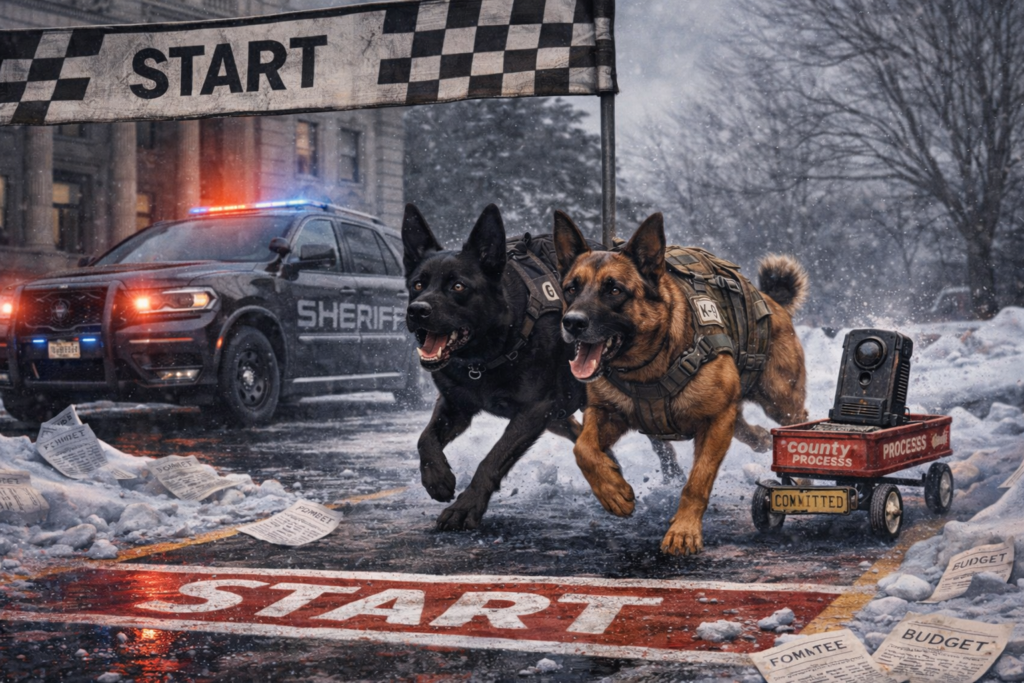
Translation From Bureaucrat to English
Serious version: law-enforcement dogs occupy a special legal category under county ordinance and Wisconsin law.
SoupNutz version: if a regular dog bites you, paperwork enters the chat. If a police dog bites you during “proper law enforcement functions,” the county already packed an excuse bag and left it by the door.
And for years, the office didn’t even have a body-camera policy in place to help settle disputes cleanly. That’s the kind of irony local government should have to wear on a sandwich board downtown.
Final Crossing Signal
Douglas County trusted bite-trained police dogs in high-risk encounters before it trusted deputies with a camera policy designed to document the encounters. That’s the story.
Not “all cops bad.” Not “all dogs bad.”
Just the same old county-fair version of accountability: lots of uniforms, lots of confidence, and somehow the receipt is always missing.
Teachers still show up, nurture kids, and do the work without this kind of loophole cosplay. Regular public employees keep the lights on without needing a carveout every time something goes sideways.
“the Sheriffs Department, meanwhile, keeps polishing the badge, and calling it reform.”
Sources : County Ordinance

Mayor Jim Paines Re-Election Platform Is Direct Deposit
Local politics morph into a lifestyle as teachers and city workers keep communities running while politicians evade regular life.

178.5 Hours of Overtime and Not a Pothole Filled
Discover how the city’s desk job transforms into a lucrative overtime role, turning public service into a money-making sitcom. Follow the money!

FOIA: Mayor James Paine Salary Hits $100K – 2018-2025
Discover how Mayor James W. Paine’s consistent salary growth and daily work entries reflect a stable compensation structure funded by taxpayers.
FOIA: Legal Bills Hit $1.9K – Walgreens Case (Feb 2025)
Review of a February invoice reveals fragmented legal work for the City of Superior, raising concerns about costs and accountability in public funds.
FOIA CITY-Superior Telegram Spending Breakdown 2025
Concerns arise over municipal spending on public notices, highlighting reliance on costly vendors and lack of competitive bidding. Transparency is essential.