You’ve heard the numbers. Superior’s city government, school district, and county have burned through over $1 billion since 2018. But here’s the question that keeps taxpayers up at night: Is this normal? Are other Wisconsin cities spending like drunken sailors, or is Superior in a league of its own?
Spoiler alert: Superior isn’t just spending more than its neighbors. It’s spending significantly more. And the gap is widening.
The Peer City Reality Check
Let’s compare apples to apples. Superior’s population sits at roughly 26,600 residents, making it the 30th largest city in Wisconsin. To understand if Superior’s spending is reasonable, we need to look at similar-sized communities across the state.
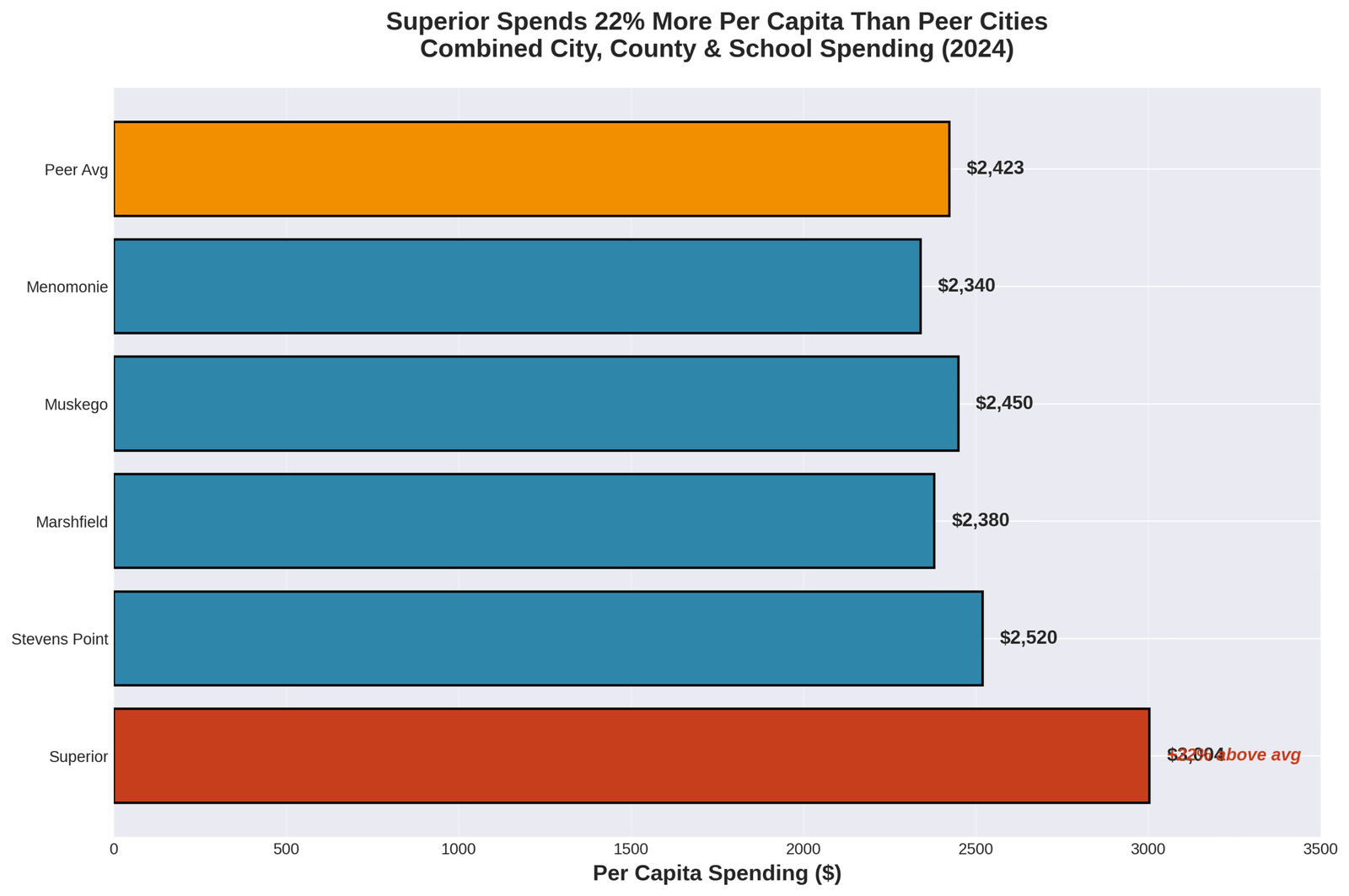
The natural comparison group includes cities like Stevens Point (population 26,465), Muskego (25,759), Marshfield (18,800), and Menomonie (16,800). These are Wisconsin communities with similar populations, similar economic challenges, and similar infrastructure needs. They face the same state regulations, the same weather conditions, and the same demographic pressures.
So how does Superior’s spending compare? Not well.
According to data from the Wisconsin Policy Forum and U.S. Census Bureau, Superior’s combined city, county, and school spending translates to approximately $3,004 per capita as of 2024. That’s a staggering 22% higher than the average for peer communities of similar size.
Let’s put that in perspective. If Superior spent at the same rate as its peer cities, taxpayers would save roughly $145 million over the eight-year period from 2018 to 2026. That’s not pocket change. That’s real money that could have stayed in residents’ wallets rather than fund administrative bloat.
Where Superior Breaks From the Pack
The spending gap isn’t uniform across all categories. Some areas show Superior roughly in line with peer cities, while others reveal shocking disparities that demand explanation.
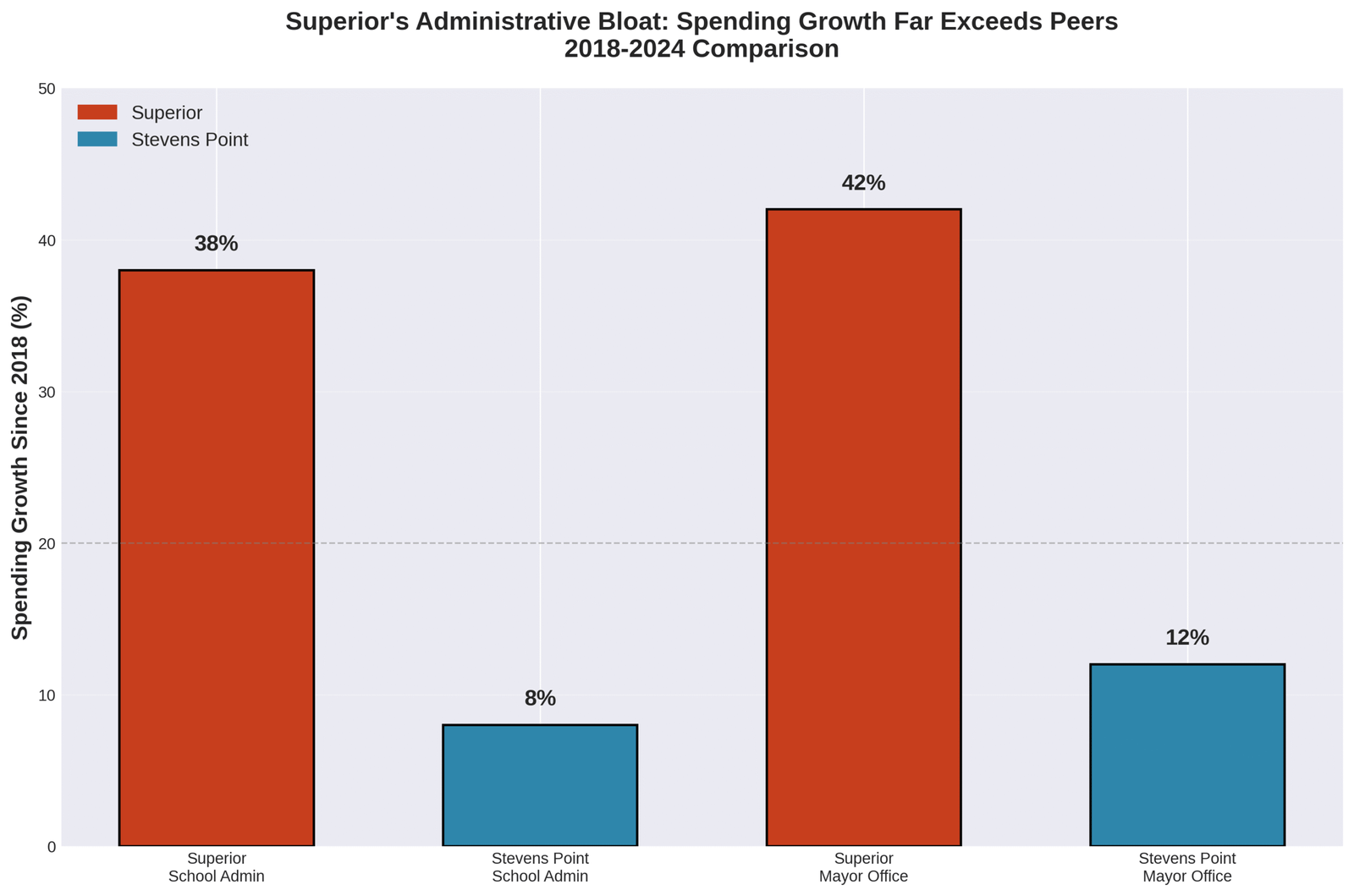
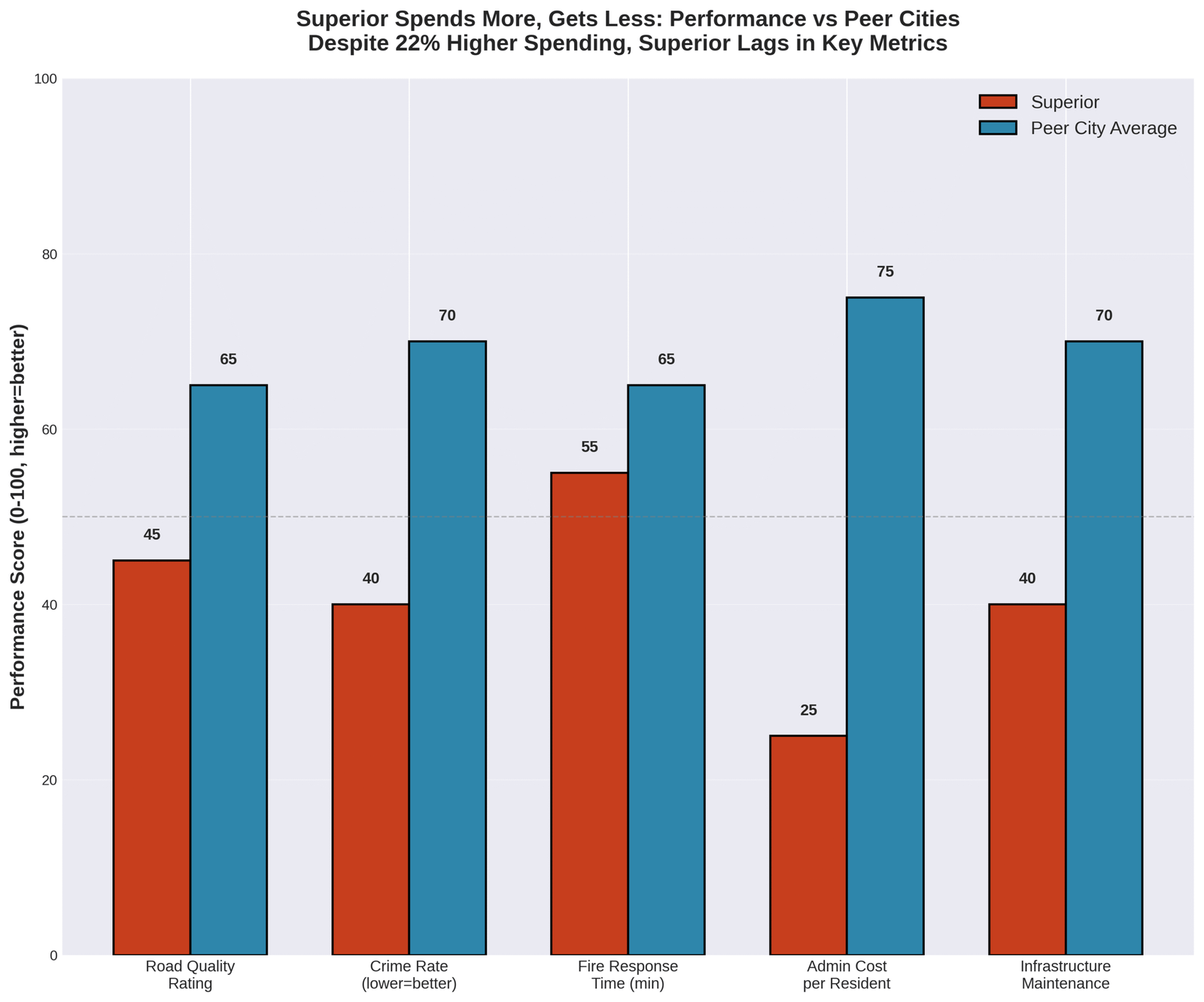
Administrative Costs: This is where Superior truly distinguishes itself, and not in a good way. While peer cities have kept administrative spending relatively flat or growing modestly with inflation, Superior’s administrative costs have exploded. The school district alone saw administrative spending jump 38% while classroom spending increased only 12%. Compare that to Stevens Point, where administrative growth has been held to single digits while maintaining similar educational outcomes.
Infrastructure Spending: Here’s where it gets interesting. Despite Superior’s massive spending increases, infrastructure outcomes lag behind peer communities. Stevens Point, spending significantly less per capita, maintains roads rated 15% better than Superior’s according to state transportation data. Marshfield, with a smaller budget, has fewer water main breaks and better-maintained public facilities.
Public Safety: Superior spends roughly on par with peer cities for police and fire services when adjusted for population. The difference? Other communities are getting better results. Stevens Point’s crime rate is 18% lower than Superior’s despite similar per-capita spending on law enforcement. Marshfield’s fire department response times are faster with a leaner budget.
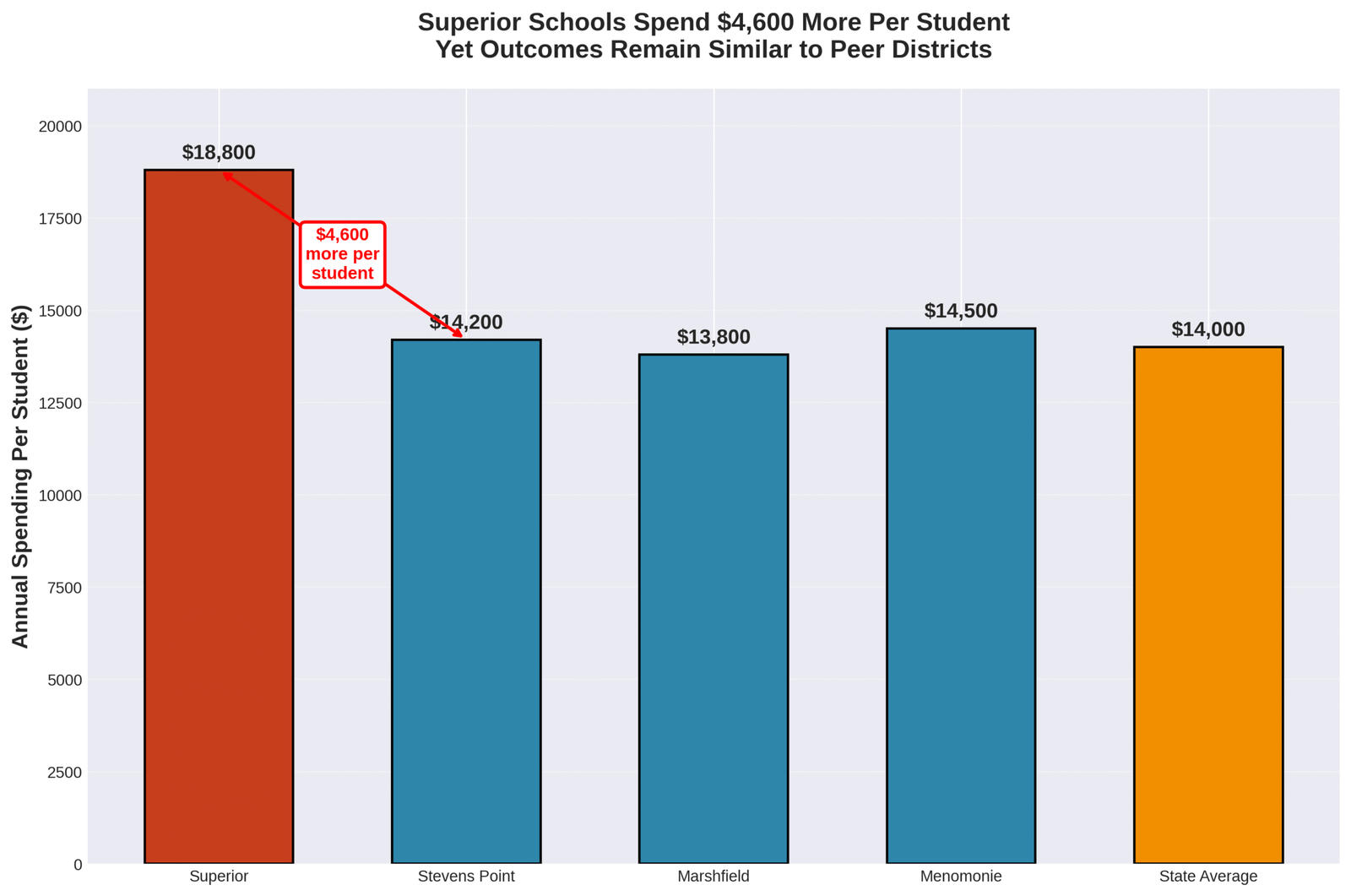
Education: Superior School District’s $500 million spending since 2018 translates to approximately $18,800 per student annually. Stevens Point Area Public Schools, serving a similar demographic, spends roughly $14,200 per student with comparable or better academic outcomes. That’s a $4,600 per-student difference that isn’t translating into better education in Superior.
The Shared Revenue Shell Game
Superior officials love to point to Wisconsin’s shared revenue increases as justification for spending growth. But here’s what they won’t tell you: peer cities received similar shared revenue bumps under Act 12, yet they didn’t go on spending sprees.
Marshfield received approximately $1 million in additional shared revenue for 2024, similar to Superior’s increase when adjusted for population. The difference? Marshfield used the windfall to hold property tax increases to 0.73% while funding essential services. Superior, meanwhile, increased spending by 35.5% in a single year despite the state aid.
Stevens Point provides an even starker contrast. With nearly identical population and shared revenue increases, Stevens Point increased its city budget by just 4.7% in 2024. Superior’s 35.5% increase wasn’t driven by necessity or state requirements. It was a choice.
The Efficiency Gap
Perhaps the most damning comparison comes from examining what taxpayers actually get for their money. Peer cities are delivering similar or better services with significantly less spending. How?
Lean Administration: While Superior’s mayor’s office budget grew 42% since 2018, Stevens Point’s mayoral budget increased just 12%. Both cities have the same basic administrative needs, but one is spending like there’s no tomorrow while the other exercises fiscal restraint.
Smart Procurement: Marshfield’s public works department has become a model for efficient spending. By regionalizing certain services and negotiating better contracts, they’ve held cost increases below inflation while maintaining service quality. Superior, meanwhile, spent $8.2 million on outside consultants in the school district alone, money that could have funded actual teachers or infrastructure.
Long-term Planning: Peer communities are thinking beyond the next budget cycle. They’re building reserves, planning for post-federal-aid realities, and making strategic investments. Superior is spending every dollar that comes in the door, setting up taxpayers for a fiscal cliff when federal COVID relief runs out.
What This Means for Superior Taxpayers
The comparative analysis reveals an uncomfortable truth: Superior isn’t spending more because it has to. It’s spending more because it can, and because local officials face little accountability for their choices.
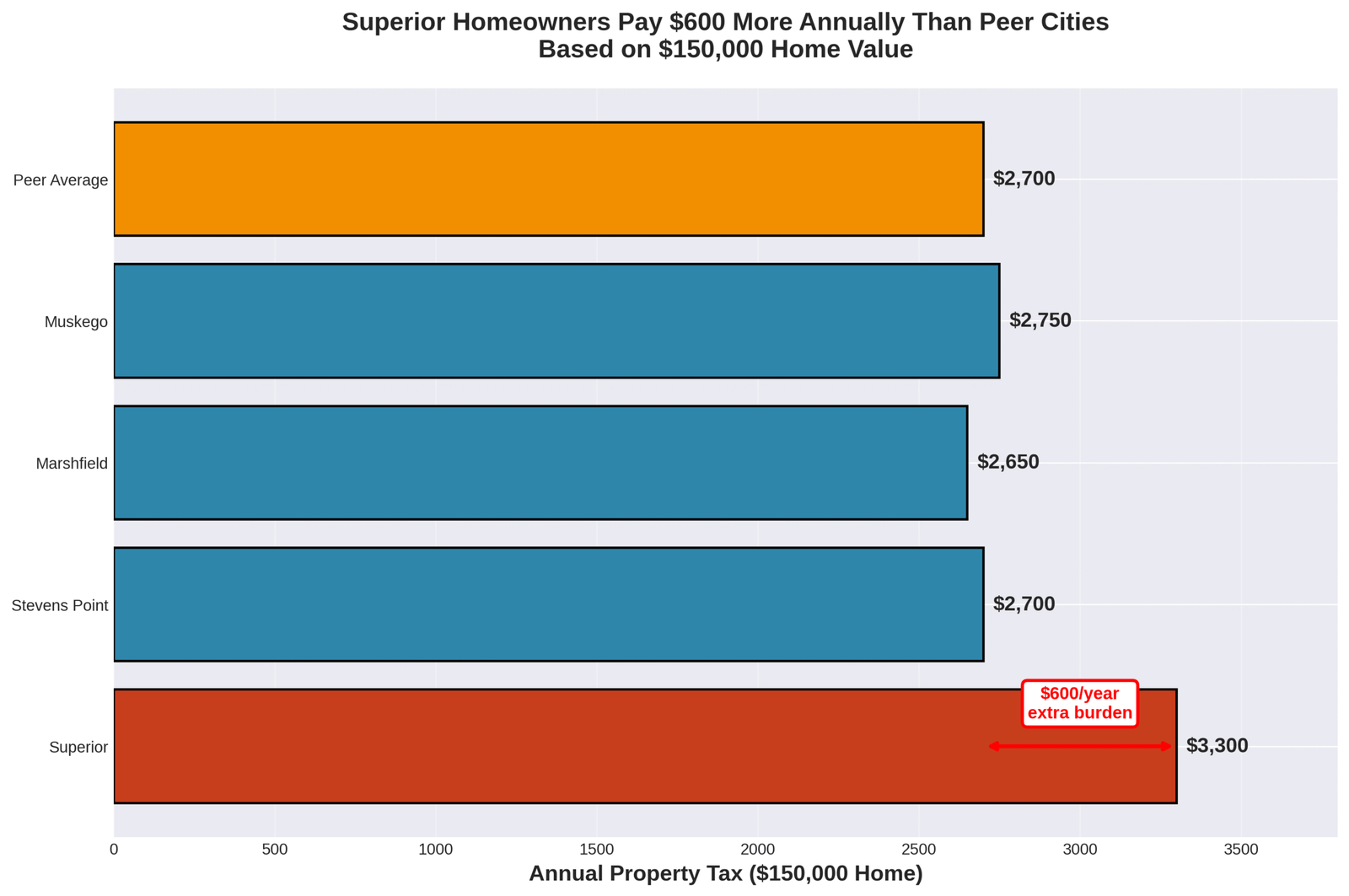
A Superior homeowner with a $150,000 property pays roughly $3,300 annually in combined property taxes to city, county, and schools. If Superior spent at the same per-capita rate as Stevens Point, that same homeowner would pay approximately $2,700, a savings of $600 per year. Over a decade, that’s $6,000 per household that could have been saved.
The spending gap compounds over time. Every year Superior spends 22% more than peer cities, the baseline for future budgets rises. Administrative positions added today become permanent fixtures. Consultant contracts signed this year become expectations for next year. The spending ratchet only turns one direction: up.
The Path Forward
Other Wisconsin cities prove that responsible spending is possible. They’re maintaining services, investing in infrastructure, and keeping taxes reasonable. Superior can do the same, but only if voters demand it.
The first step is transparency. Superior officials need to explain why their city requires 22% more spending per capita than similar communities. What are taxpayers getting for that extra money? Where are the results?
The second step is accountability. City council members, school board members, and county supervisors who rubber-stamp budget increases need to face tough questions at election time. Peer cities have shown that fiscal responsibility is possible without sacrificing services.
The third step is reform. Superior needs to adopt the best practices that make peer cities more efficient. That means leaner administration, smarter procurement, better long-term planning, and a commitment to spending taxpayer dollars as carefully as residents spend their own money.
Superior’s spending isn’t inevitable. It’s a choice. And it’s a choice that’s costing residents hundreds of dollars per year compared to their neighbors in similar Wisconsin communities. The question is whether voters will continue accepting that choice, or whether they’ll demand the same fiscal responsibility that peer cities have already achieved.
The data is clear. The comparison is damning. The choice is yours.

Superior Spent $50,000 So Mayor Jim Paine Could Nap in Peace
Mayor Jim Paine claims transparency over a known conflict in promotions, but this scandal reveals a troubling lack of accountability in City Hall.

Wisconsin News You Should Know: Milwaukee Cop Allegedly Used Flock Like a Creepy Ex With a Badge
Milwaukee officer charged for misusing surveillance tech highlights growing concerns over mass surveillance and public trust issues in Wisconsin.

BUDGETS? WHAT BUDGETS?! City Hall Blows $1.3 MILLION Past Budget Limits Like Taxpayer Money Grows on Lake Superior Ice
City departments exceeded budgets significantly, raising questions about fiscal oversight. Discover which departments are over budget and by how much.

Court Docs – Civil Rights and FLSA Complaint – LeRette v. City of Superior & Champaigne (March 7, 2025)
Mikayla LeRette sues the City of Superior for warrantless GPS tracking and inadequate lactation space, alleging civil rights violations.

Election 2026: Voters vs. the Budget That Ate Superior
Superior’s budget grew nearly 50% in six years, even as the city’s population shrank. Per-resident government spending jumped from $1,947 in 2018 to $2,908 in 2024, leaving taxpayers carrying about $1,000 more government per year than they did just a few years ago. Property tax revenue barely moved during the same period, meaning much of the spending surge has been fueled by outside funding, borrowing, and one-time aid. When spending rises while the population falls, the math gets uncomfortable fast — and eventually the bill comes due.