Democracy Isn’t a Pet Store
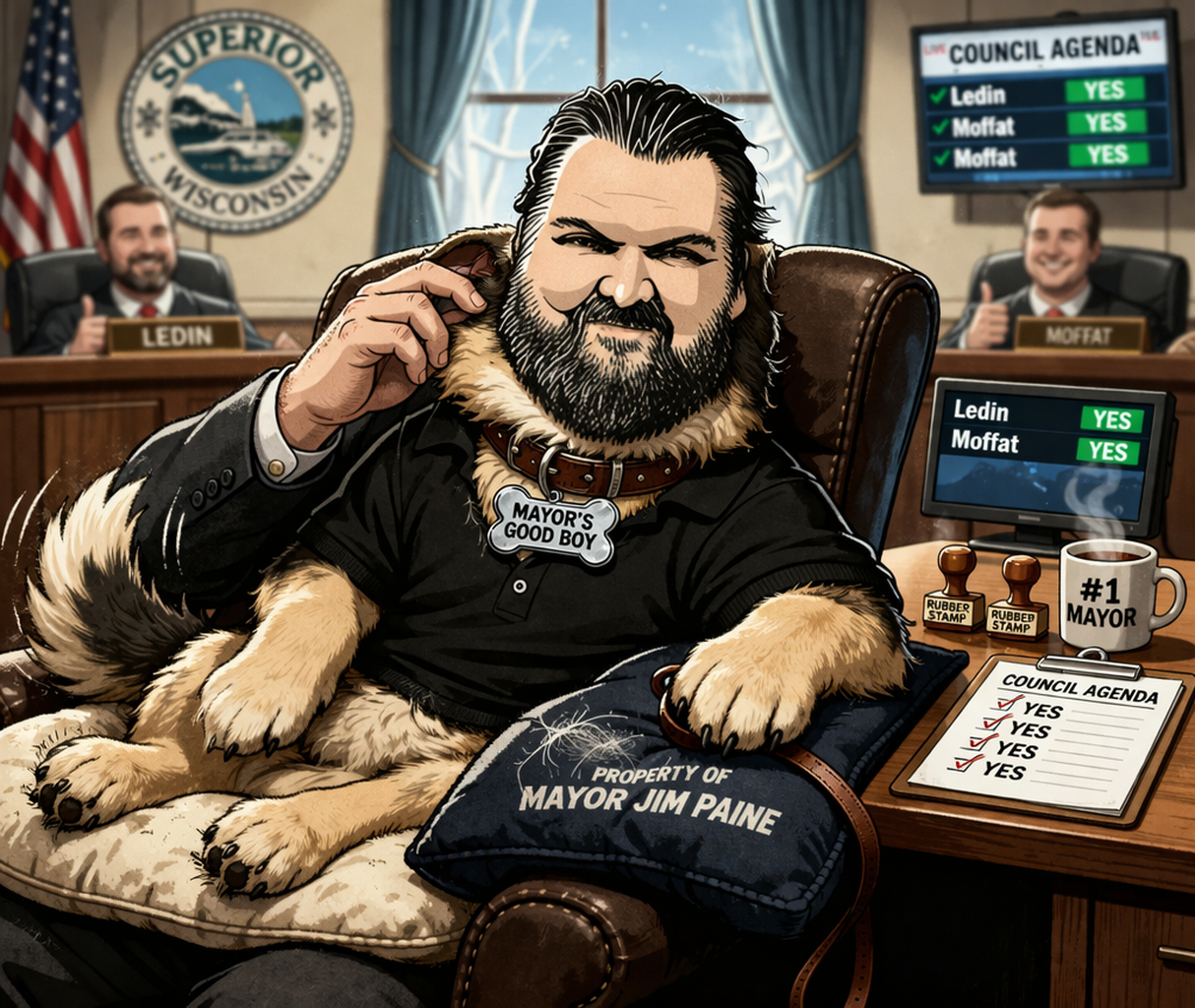
Look—if you elect a Common Council and they show up acting like they’re auditioning for “America’s Got Leashes,” you don’t have representative government.
You have a mayor with a council-themed accessory pack.
And that’s where the charter problem starts.
Superior runs a mayor–council system. That’s supposed to mean:
- Council = legislative branch (writes rules, sets policy, controls the purse)
- Mayor = executive branch (runs operations, enforces the laws, carries out policy)
It’s not supposed to mean:
Mayor talks. Council claps. Budget approves itself. Everyone goes home.
The Charter Isn’t a Suggestion, It’s the Blueprint

Here’s the part some folks “forget” like it’s a speed limit in a snowstorm:
The council exists to legislate. That’s not “vibe support.”
That’s not “show up, vote yes, and collect the complimentary breath mint.”
Legislating means you’re supposed to do annoying stuff like:
- ask questions
- demand receipts
- change proposals
- reject bad ideas
- protect the public’s money
- represent your district instead of your mayor’s mood swings
If councilors operate as automatic yes-buttons, they may not be “breaking the charter” in the courtroom sense—because being obedient isn’t illegal.
But they’re absolutely breaking the system’s purpose, which is the whole point of having branches in the first place.
Because if the council stops acting like a check, the mayor stops being “executive” and becomes “whatever the hell I want, signed by my applause squad.”
“Lap Dog” Behavior Creates a Real Governance Problem
Let’s be honest: a lap dog doesn’t read.
A lap dog doesn’t amend.
A lap dog doesn’t say, “Wait—what’s this contract, and why does it smell like overtime and excuses?”
A lap dog hears: “Sit.”
Then sits.
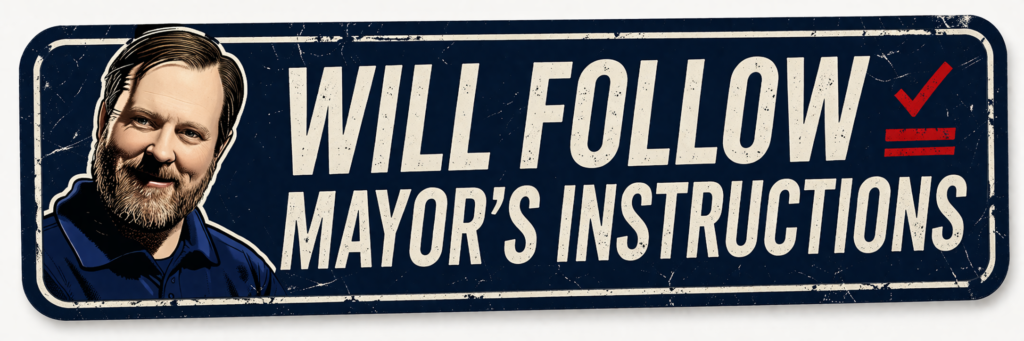
Now apply that to council votes.
If Nick “Lockstep” Ledin and Garner “Mandate” Moffat (allegedly, politically, spiritually—not medically) behave like the mayor’s go-to “yes,” here’s what happens:
### 1) The legislative branch becomes decorative
Congrats, you just turned the council into the “Live Studio Audience” sign from a 90s sitcom.
### 2) Accountability gets outsourced to angry residents
If your elected officials won’t challenge anything, residents end up doing it—at meetings, in records requests, in elections, in lawsuits, in snarky blogs that smell like fresh ink and spite.
### 3) The mayor gets blamed for everything
When councilors won’t own decisions, they hand the mayor all the power and all the responsibility. That’s not leadership. That’s setting up the city for a political food fight.
“But They Can Vote How They Want!” Yeah—And You Can Eat Glue
Sure. Councilors can vote however they want.
They can also wear a clown nose to meetings.
But the system expects them to use independent judgment. That’s the job. That’s what “district representation” is.
If they don’t?
Then you don’t have checks and balances.
You have checks and belly rubs.
So Did They “Break the Charter”?
Here’s the honest answer, without the City Hall perfume:
- If they’re simply agreeing with the mayor a lot, that’s politics.
- If they’re coordinating votes to pass a shared agenda, still politics.
- If they’ve basically reduced their role to rubber-stamping executive wishes without scrutiny, debate, or district representation?
That may not be a clean “charter violation” you can prosecute like a parking ticket…
…but it sure as hell violates the spirit of the structure Superior claims to operate under.
And when the spirit dies, all you’re left with is paperwork and a smug grin.
Final Crossing Signal
Superior doesn’t need lap dogs. It needs councilors who act like legislators.
Because the charter didn’t create a council to be the mayor’s “emotional support branch.”
It created a council to say, sometimes:
“No.”
“Not like that.”
“Show the numbers.”
“Who benefits?”
“Why now?”
“What’s the plan when this blows up?”
If your council can’t do that, then residents aren’t being governed.
They’re being managed.
And nobody elected a manager.
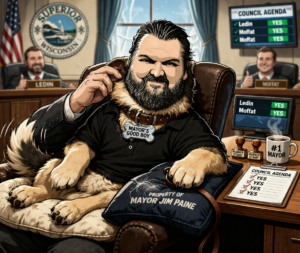
Ledin and Moffat Might Want to Read the Part About Separation of Roles
Superior needs assertive councilors who legislate, not lap dogs. Stop rubber-stamping—it’s time for checks and balances in governance!

Browser History Suggests City Hall Is in a Toxic Relationship With SoupNutz
City Hall’s focus on silencing critics distracts from budget duties. They should prioritize genuine civic engagement and financial responsibility instead.

Mayor Jim Paines Echo Chamber Loses Labor Support
Mayor Jim’s crew faces backlash over union job losses tied to the NTEC plant. Hard hats demand real support, not empty speeches.

Mayor Jim “Petty” Paine Stars in “Honey, I Shrunk Accountability”
Superior’s appeal hints at a courtroom farce where accountability is absent, and taxpayers bear the brunt of the spectacle.

Douglas County’s Police Dogs Have a Loophole, and Deputies Still Don’t Have Body Cameras
Douglas County’s police dogs bypass bite reporting rules, lacking body cameras for accountability. Is transparency just a magic trick?