Written Warning in the LeRette Case
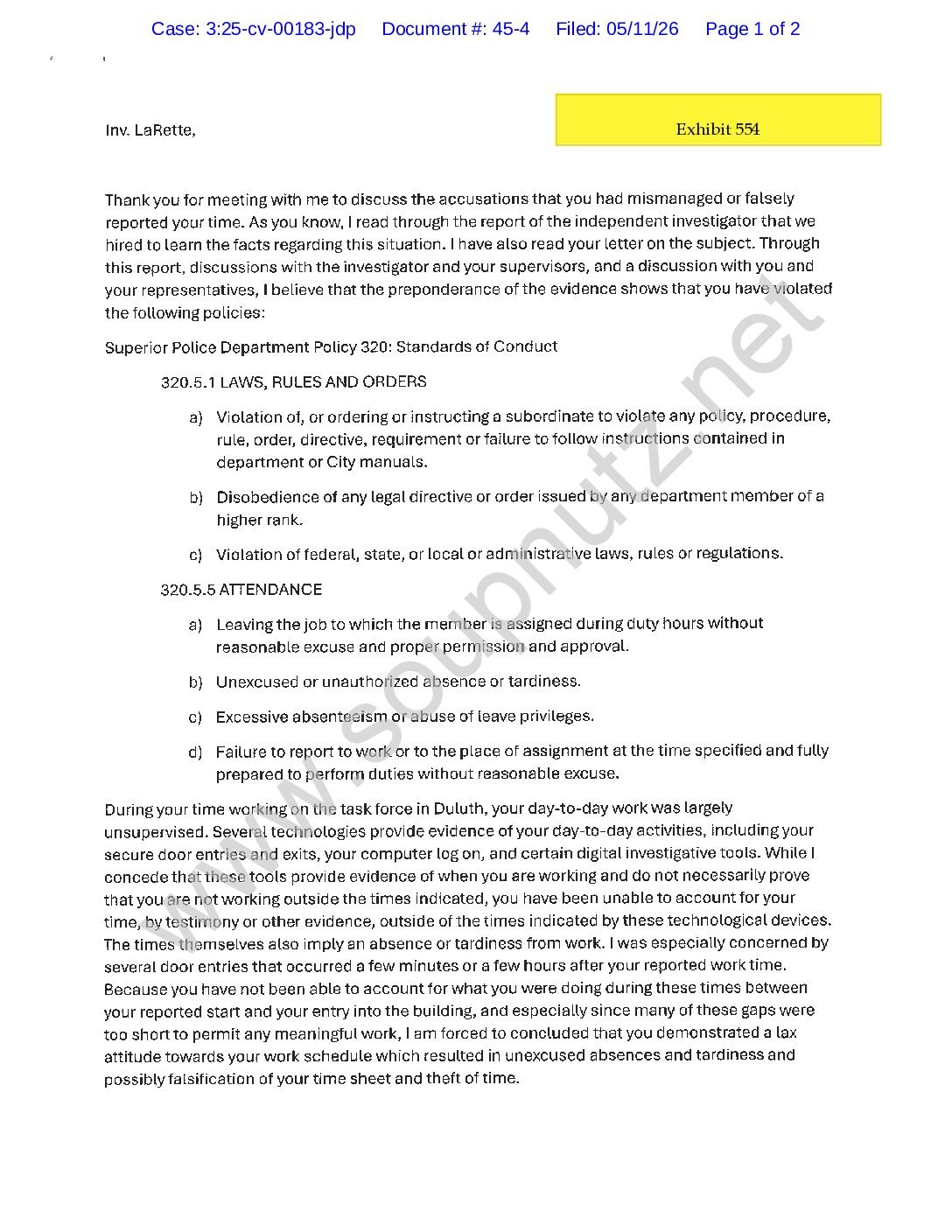
This two-page document is a written warning addressed to Investigator LeRette. It was filed as Exhibit 554 in Mikayla Marie LeRette v. The City of Superior, Wisconsin, Case No. 25-CV-183. The letter discusses accusations that LeRette mismanaged or falsely reported her time while working on a task force in Duluth.
Policies Cited Against LeRette
The author states that the “preponderance of the evidence” showed violations of Superior Police Department Policy 320. The letter cites Standards of Conduct sections on laws, rules, orders, and attendance. It lists alleged violations involving disobedience, unauthorized absence, tardiness, abuse of leave, and failure to report to an assignment as scheduled.
Technology and the Time Allegations
The letter relies on secure door entries and exits, computer logins, and digital investigative tools. It concedes that these tools show when LeRette worked, but do not necessarily prove she was not working outside those times. Still, the author says LeRette failed to account for gaps between reported work time and building entry times.
Discipline Without Heavy Penalty
The letter says LeRette received orders from Superior and Duluth supervisors to report schedule changes to her Superior supervisor. It says those were lawful orders, even though LeRette claimed the policy was newly strict. The author then states the violations were serious and merited discipline.
Warning, Threat, and Leniency
The document imposes a written warning for LeRette’s supervisory file. It says the discipline was “significantly more lenient” than the violations deserved. It also praises her positive work history and reputation as a skilled police officer. Yet the final warning carries a sharper edge. Future violations, the letter says, may cause officials to skip steps on the disciplinary ladder and impose more severe sanctions.
Why Taxpayers Should Care
This warning shows City Hall acting like judge, jury, and custodian of reputation. The letter admits the technology did not prove LeRette was not working outside logged times. Then it treats the gaps as enough to suggest falsification and possible theft of time. That leap matters. A public employee’s career can turn on words like “possibly,” especially in law enforcement.
For local taxpayers, the record raises a simple accountability question. Did the City prove misconduct, or did it dress suspicion in official letterhead?