
SOUPNUTZ EXCLUSIVE: THE DEPOSITION THAT SAID THE QUIET PART OUT LOUD


You ever read something and think, “Wow. That’s either confidence… or denial”?

Sergeant Matthew Brown’s September 24, 2025 deposition in Cuypers v. Taylor isn’t a Hollywood script. It’s 64 pages of federal court testimony.

And it reads like a masterclass in selective memory.

(See Brown Deposition filed Nov. 14, 2025 )


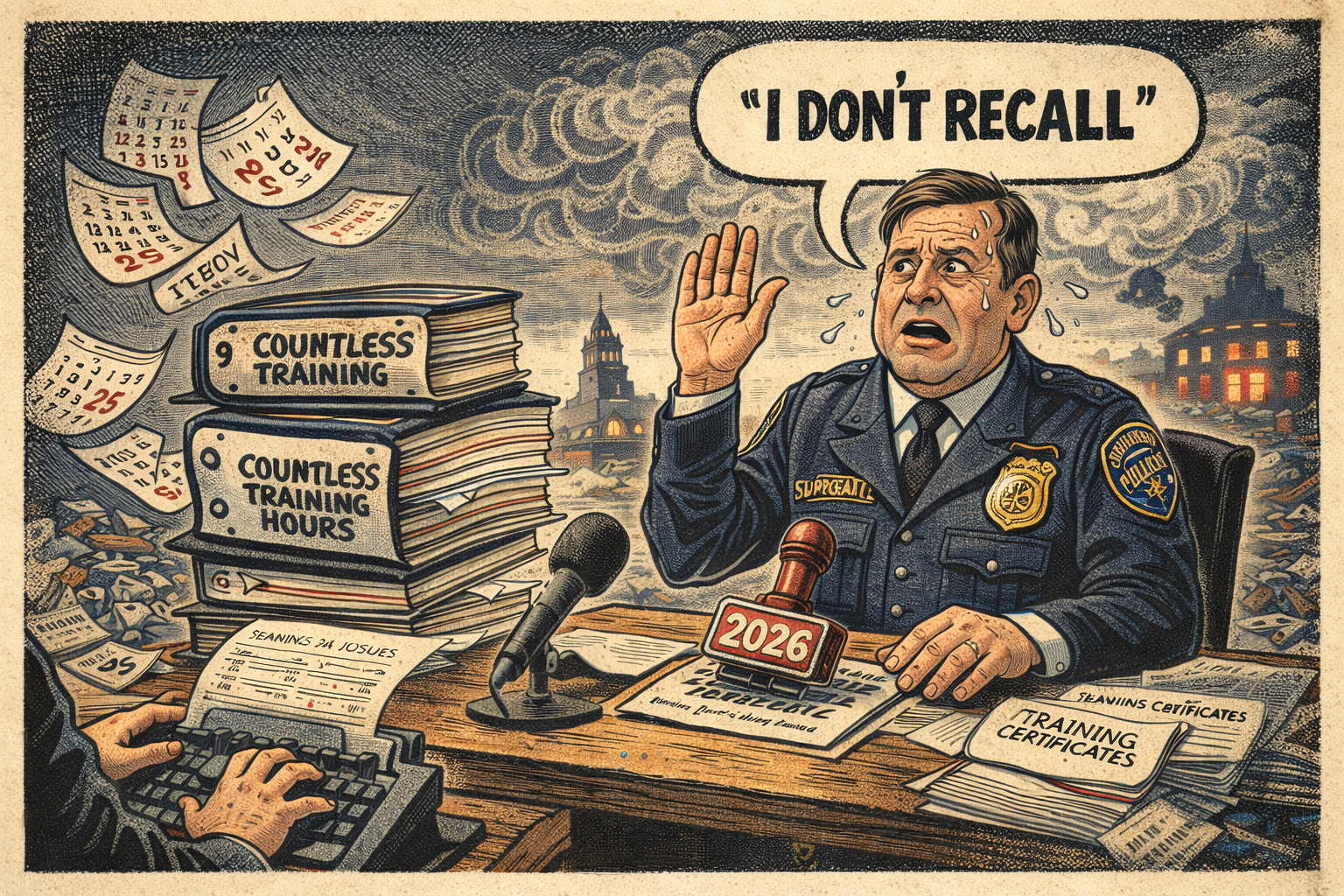
“Countless Hours of Training”

Brown testifies he’s been with SPD since May 2013. Sergeant since 2020. Bachelor’s in political science.

He says he’s received:

“Countless hours of training.” (p.15)

Countless.

That’s not training. That’s a Netflix series.

He confirms he was trained on when it’s appropriate to draw a firearm:

Officers may draw when they have “reasonable suspicion to believe that the use of deadly force may be necessary.” (Use of Force policy, p.17)

He confirms he’s trained on passive vs. active resistance:

Passive resistance:

“Non-threatening and non-compliant behavior.” (p.20)

Active resistance:

“Physically counteracts an officer’s control efforts and creates risk of bodily harm.” (p.20)

Clear definitions.

Clean lines.

Until real life happens.


The Memory Fog

Now let’s talk about what he doesn’t remember.

When asked about a documented arrest that resulted in a downgrade in his performance evaluation for:

“Improper development, supervision, and execution of a planned arrest” (p.30)

His response?

“I honestly don’t know which arrest that one is talking about.” (p.30)

Later, regarding meetings with probationary Officer Justin Taylor after deficiencies were identified in:

  • Patrol tactics

  • Officer safety

  • Problem solving

  • Decision making

He says:

“I honestly don’t recall.” (p.41–43)

He signed the Performance Improvement Plan extending Taylor’s probation by eight shifts (p.40).

But the discussions?

The guidance?

The corrective supervision?

Foggy.

That’s not a paperwork issue.

That’s a supervision issue.


The Irony: “We Formulated a Plan”

Here’s the part that stings.

In a prior commendation, Brown was praised because officers:

“Formulated a very well thought-out plan and executed it with perfection.” (p.33)

He was literally commended for slowing down and planning before engaging a mentally ill subject.

But in this case?

The federal lawsuit centers on whether officers escalated force appropriately, whether resistance was passive or active, and whether supervision mattered.

Planning is a virtue when it earns a commendation.

But apparently optional when it risks civil liability.

That’s not satire.

That’s irony wearing body armor.


The Civil Rights Elephant in the Room

Here’s the bigger question:

When has Mayor Jim Paine publicly acknowledged a civil rights violation in Superior?

When has this City Council ever said, “We got this one wrong”?

Not “we’re reviewing policies.”

Not “we take this seriously.”

Actual acknowledgment.

Because federal civil rights lawsuits don’t materialize out of thin Lake Superior air.

They arise when someone claims constitutional violations.

And here’s the irony:

If you never admit violations exist,
You never reform them.
You just defend them.

Every time.


Why Taxpayers Should Care

Brown testified he can override officers. He supervises probationary officers. He can see CAD entries live.

He has authority.

Authority equals responsibility.

When supervision gaps meet documented probationary deficiencies and federal litigation, plaintiffs don’t just sue the officer.

They sue the system.

Civil rights lawsuits cost money whether you win or lose.

  • Legal defense costs

  • Insurance premium increases

  • Potential settlements

  • Policy overhaul expenses

And if leadership refuses to acknowledge constitutional failures publicly, they signal one thing:

Litigate first. Reflect later.

That strategy doesn’t save money.

It postpones accountability.

And postponement compounds cost.


Final Crossing Signal

Sergeant Brown testified under oath.

He confirmed training.

He confirmed supervision authority.

He confirmed policy definitions.

He confirmed extending probation for deficiencies.

He confirmed he doesn’t recall key meetings.

That’s not villainy.

That’s vulnerability.

And here’s the uncomfortable part:

When leadership never publicly acknowledges civil rights violations, it creates a culture where lawsuits are treated like weather events instead of warning signs.

You can’t fix what you won’t name.

And taxpayers shouldn’t fund denial.

Mic drop.

Source :

Brown Deposition Cuypers_Ian_v_Taylor_Justin_et_al__wiwdce-24-00743__0040.4

Disclaimer

This article is commentary based on publicly filed deposition testimony and court documents. Allegations discussed remain subject to ongoing legal proceedings, and no final determination of liability has been made. Readers are encouraged to review the full deposition transcript for context. Teachers continue to nurture and educate Superior’s children daily, often without the compensation administrators negotiate for themselves. Likewise, city employees work hard for their pay while leadership decisions shape the financial and legal exposure facing taxpayers.

A police officer in uniform at a desk, stating 'I don't recall' with stacks of papers and training certificates around him.

Superior Sgt’s Federal Deposition – Countless Training Hours. Countless ‘I Don’t Recall.

SOUPNUTZ EXCLUSIVE: THE DEPOSITION THAT SAID THE QUIET PART OUT LOUD You ever read something and think, “Wow. That’s either confidence… or denial”? Sergeant Matthew Brown’s September 24, 2025 deposition in Cuypers v. Taylor isn’t a Hollywood script. It’s 64 pages of federal court testimony. And it reads like a masterclass in selective memory. (See Brown Deposition filed Nov. 14, 2025 ) “Countless Hours of

Read More »
Illustration depicting a courtroom scene with a young man, a tax meter, and an eye symbolizing scrutiny.

Why Superior’s Malicious Prosecution Could Cost Taxpayers Millions

The Fourth Amendment Does Not Ban Looking Around Even In Superior Here’s what the federal complaint lays out. Ian Cuypers made a wrong turn down a one-way street while delivering DoorDash. That’s a traffic ticket. According to the complaint, multiple officers arrived, drew firearms, and pointed them at him despite no basis to believe he was armed or dangerous. He exited the vehicle. He backed

Read More »
A student with a worried expression holding a notebook with 'HELP ME' written on it in a classroom setting.

Kid Still in the Superior School District? Blink Twice

The Kids Are Alright—They’re Just Not Here From 2018 to 2025, Superior Public Schools lost 722 students. That’s not a trickle—that’s a hemorrhage. We started at 4,622; now we’re sitting at 3,900, which is basically the school district equivalent of the Titanic playing musical chairs. And like any bad breakup, the school board says, “It’s not you, it’s demographic shifts, charter schools, and millennials who

Read More »
Illustration depicting the concept of qualified immunity with a judge and police officers in a courtroom setting.

“This Is Not a Close Case”: Superior Police Try to Hide Behind Qualified Immunity—Federal Judge Shreds It Like a Parking Ticket at a Frat Party

Qualified Immunity Gets the Electric Chair You ever see someone try to talk their way out of a mess they created, only for a judge to basically respond, “Oh, no”? That’s exactly what happened when three Superior, Wisconsin police officers—Taylor Gaard, Justin Taylor, and Matthew Brown—tried to pull the “we were just doing our jobs” defense after tasing an unarmed, non-threatening DoorDash driver for not

Read More »
Game show titled 'Who Wants to Replace a Councilman?' featuring contestants Natasha, Kate, and Garner.

Superior’s New Game Show: Who Wants to Replace a Councilman?

Three Ways to Lose One Seat Look alive, 3rd District! Incumbent Garner Moffat isn’t just defending his title this April — he’s duking it out with two fresh challengers, both of whom bring real‑world grit to the race. After scraping by in lower‑turnout races before, Moffat’s mandate might be about as sturdy as a paper canoe in a Nor’easter. The Incumbent: Moffat the … Mandate

Read More »