Federal Case and Public Stakes
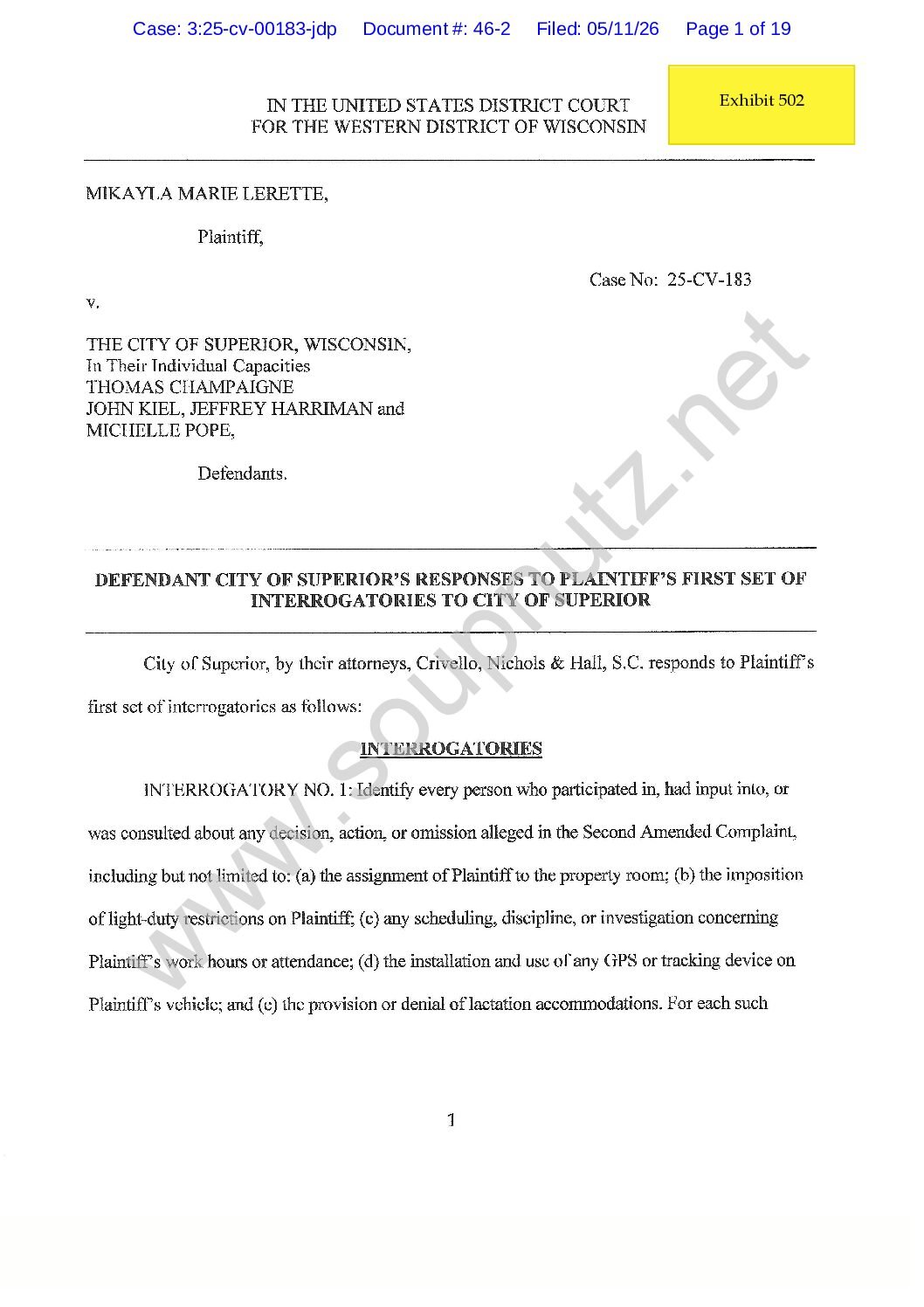
This filing was entered on May 11, 2026, in Mikayla Marie LeRette v. City of Superior, Wisconsin, Case No. 25-CV-183. The document contains the City of Superior’s responses to LeRette’s first interrogatories. The answers concern light-duty assignments, lactation accommodations, GPS tracking, internal investigations, and discipline claims within the Superior Police Department.
People and Power
The case names Mikayla Marie LeRette as plaintiff. The defendants include the City of Superior, Thomas Champaigne, John Kiel, Jeffrey Harriman, and Michelle Pope. The City identifies Nicholas Alexander, John Kiel, Michelle Pope, Jeffrey Harriman, and Thomas Champaigne as officials tied to the disputed events.
What the City Admits
The City states that LeRette worked light duty in 2022–2023 and again in 2024–2025. It says she first went to the property room, then moved after medical restrictions barred drug exposure while nursing. The City also states that officers on light duty generally could not carry a firearm, drive a City vehicle, or leave the station until a September 17, 2024 directive changed that practice.
GPS, Discipline, and Accountability
The sharpest public issue appears in the GPS response. The City says Captain Champaigne installed a tracking device on a vehicle assigned to LeRette in February or early March 2024. It says the device collected location data, and only Champaigne accessed it. Captain Harriman later removed it in March or April 2024.
The filing also states that outside investigator Daniel Hardman was retained to investigate LeRette’s alleged abuse of time. Chief Alexander recommended Hardman. City Attorney Frog Prell, HR Director Cammi Janigo, Captain Champaigne, and Assistant Chief Kiel approved the hire.
Why Taxpayers Should Care
This record shows how a local police department answers claims about pregnancy, nursing accommodations, workplace surveillance, and internal discipline. The City’s repeated objections sit beside selective admissions. That contrast gives taxpayers a useful map. It shows where authority moved, who signed off, and which facts the City chose to disclose.